

Edible San Diego

Apple-Ginger Sauerkraut

ad-1
[receipe_singel_video_post]
ad-1
ad-1
ad-1
ad-1
image_1

Photography by Becka Vance for Edible San Diego
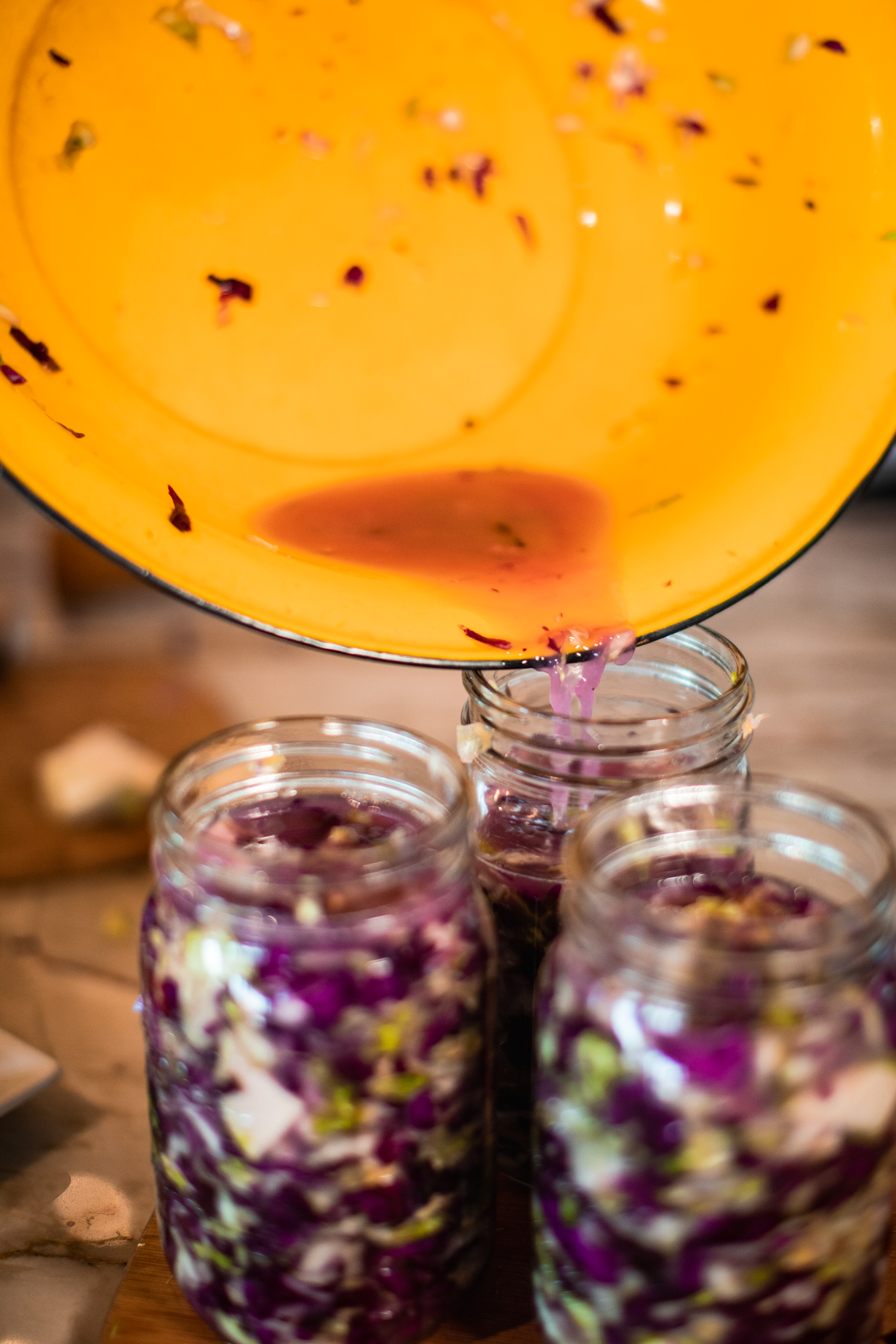
image_2

Photography by Becka Vance for Edible San Diego

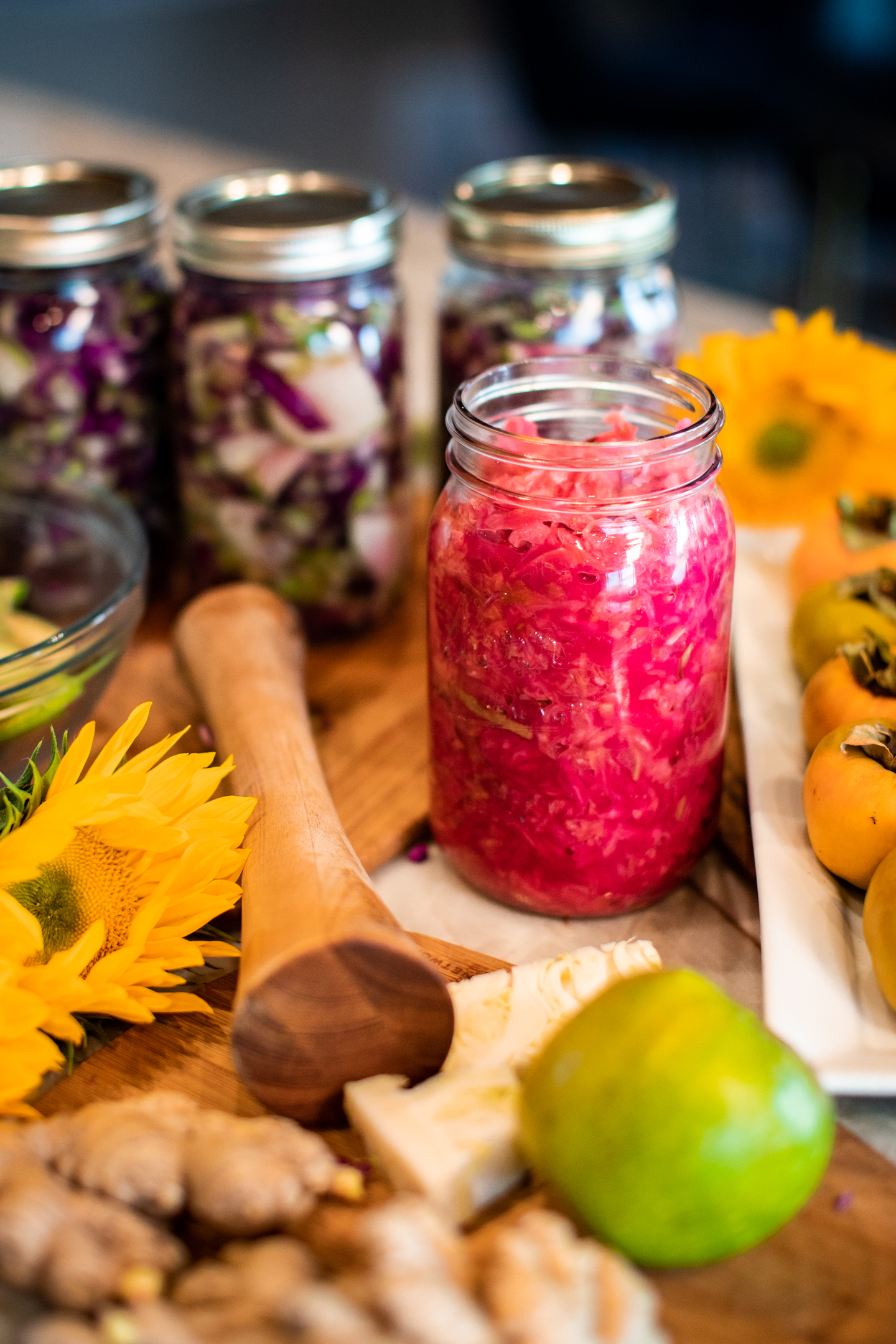
Tart apples and ginger add a delightful zing to this sauerkraut recipe

My go-to recipe for sauerkraut uses a tart apple to add sweetness and fresh ginger root to add brightness. Mix red and green cabbage together to create a stunning pink-purple accoutrement to sandwiches, salads, stir-fries, eggs, and more!

Want to know more about fermenting? Make sure to read the companion story by Austin Durant.

Fermentation Basics
Ingredients


Makes 2 Quarts

  • 2 medium heads red or green cabbage (or one of each, about 5 pounds)
  • 3 tablespoons fine sea salt
  • 2 medium tart apples (around ½ a pound)
  • 2 to 3 inches ginger root
  • 1 teaspoon caraway seeds

Instructions

  • First, clean the cabbage to wash off the dirt and remove any tough or floppy outer leaves.
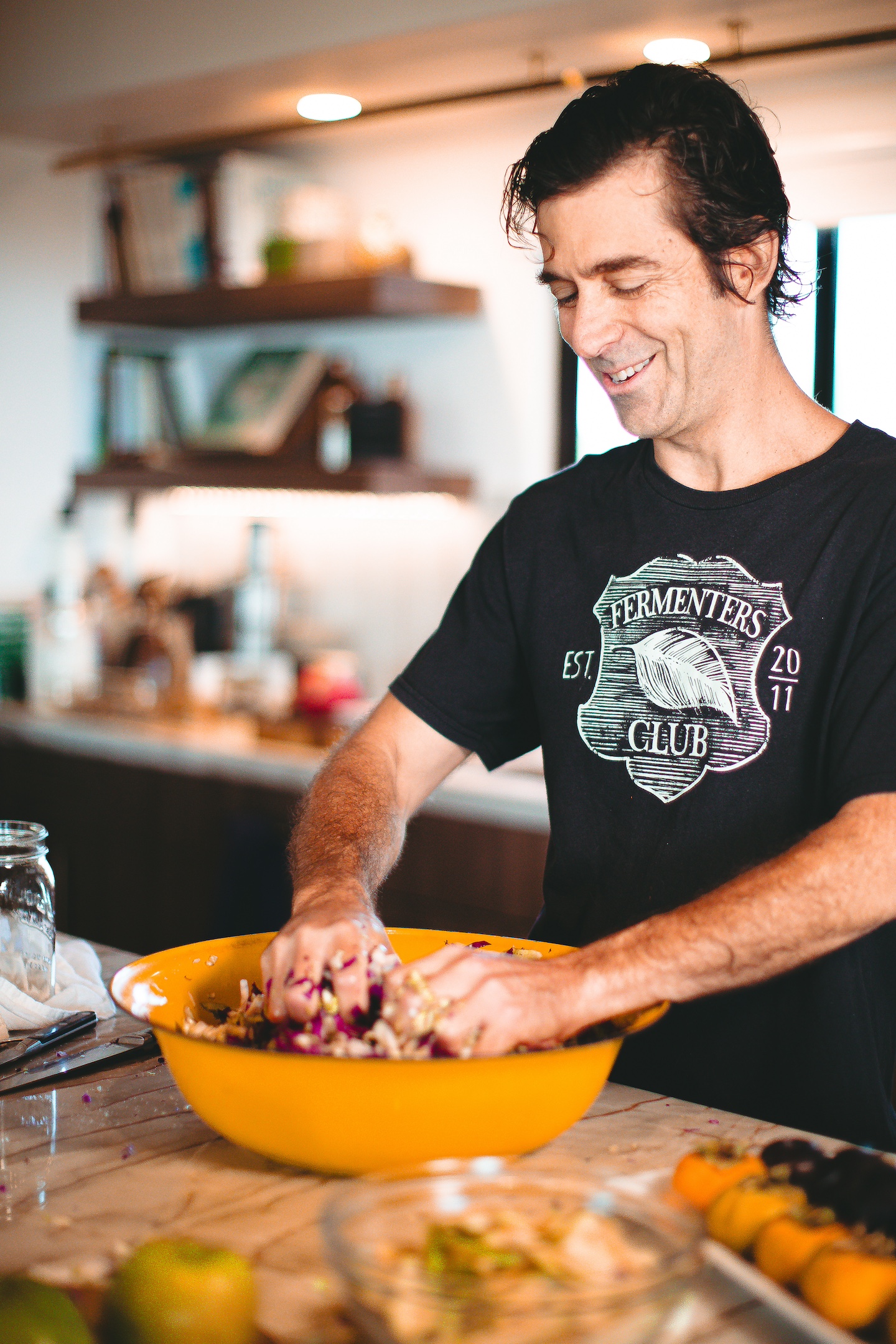
  • Shred or thinly slice each cabbage into ¼-inch to ½-inch ribbons and add to a large mixing bowl.
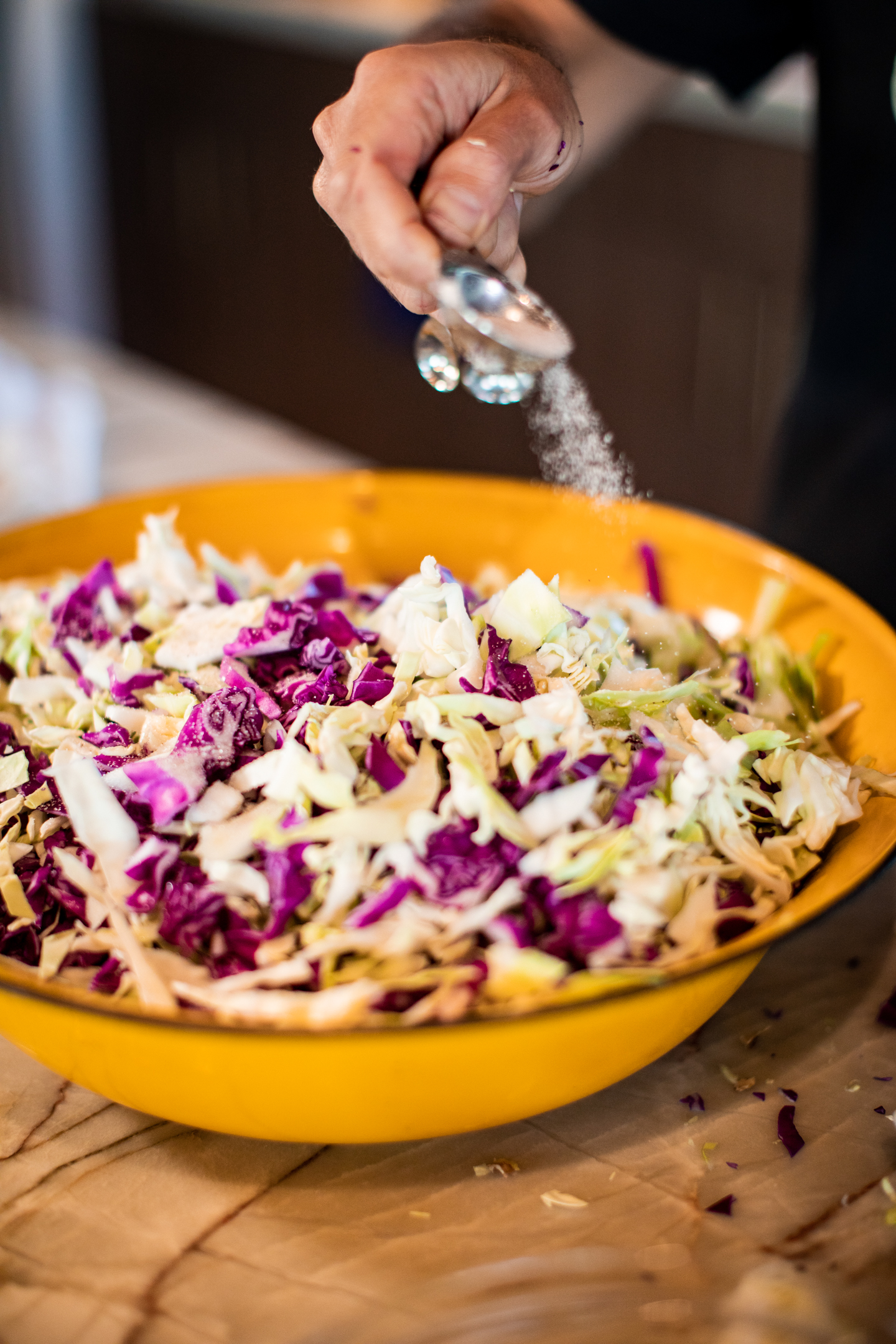
  • Sprinkle salt over shredded cabbage. Brine will form as salt draws water from the cabbage.
  • Squeeze or pound the mixture to break the cell walls and encourage water to seep out of vegetables.
  • Clean and thinly slice the apple into 1-inch bite-size pieces and add to the bowl. Wash ginger to remove dirt; peel if desired. Grate and add to the mixing bowl.
  • Add caraway seeds to the mixing bowl. Mix all the ingredients together thoroughly.
  • Add the mixture to jars or a fermentation crock. Make sure to add every last drop of brine that has formed in the mixing bowl. Pack contents tightly so that there are no air bubbles and the top surface is even and flat.
  • Place weights on top of the sauerkraut, leaving at least 1 inch of headspace from the contents and the top of the container with the weights applied.
  • Cover the container with a dish towel or tea towel to keep out flies and dust. Secure with a rubber band, twist ties, or an elastic strap. Label your container with its contents and the date when you started fermenting it. I use blue painter’s tape and a permanent marker, and I always stick the label on the side of the container rather than the lid—those lids have a notorious habit of switching jars when you’re not looking, usually in the middle of the night! Stash sauerkraut containers in a cool place out of direct sunlight. I place my container in a conspicuous spot so that I don’t forget about it. Typically, I ferment sauerkraut for two weeks in warm weather or four weeks in cooler weather.
  • When taste and texture are to your liking, transfer the contents to jars and store them in the refrigerator.
  • Sauerkraut will last in the refrigerator for several months.
contributor11101

Austin Durant

Austin Durant has been fermenting food for over 12 years. In 2011, he founded Fermenters Club, whose mission is to teach people why and how to make fermented foods at home, and to create communities connected through our guts. Austin teaches hands-on classes throughout San Diego County on fermented food traditions such as sauerkraut, pickles, kimchi, sourdough, kombucha, miso, and seasonal specialties. He is writing his first book, Fearless Fermenting, available in spring 2024!