Photography by Luke Scmuecker for Edible San Diego
Photography by Luke Scmuecker for Edible San Diego
Photography by Luke Scmuecker for Edible San Diego
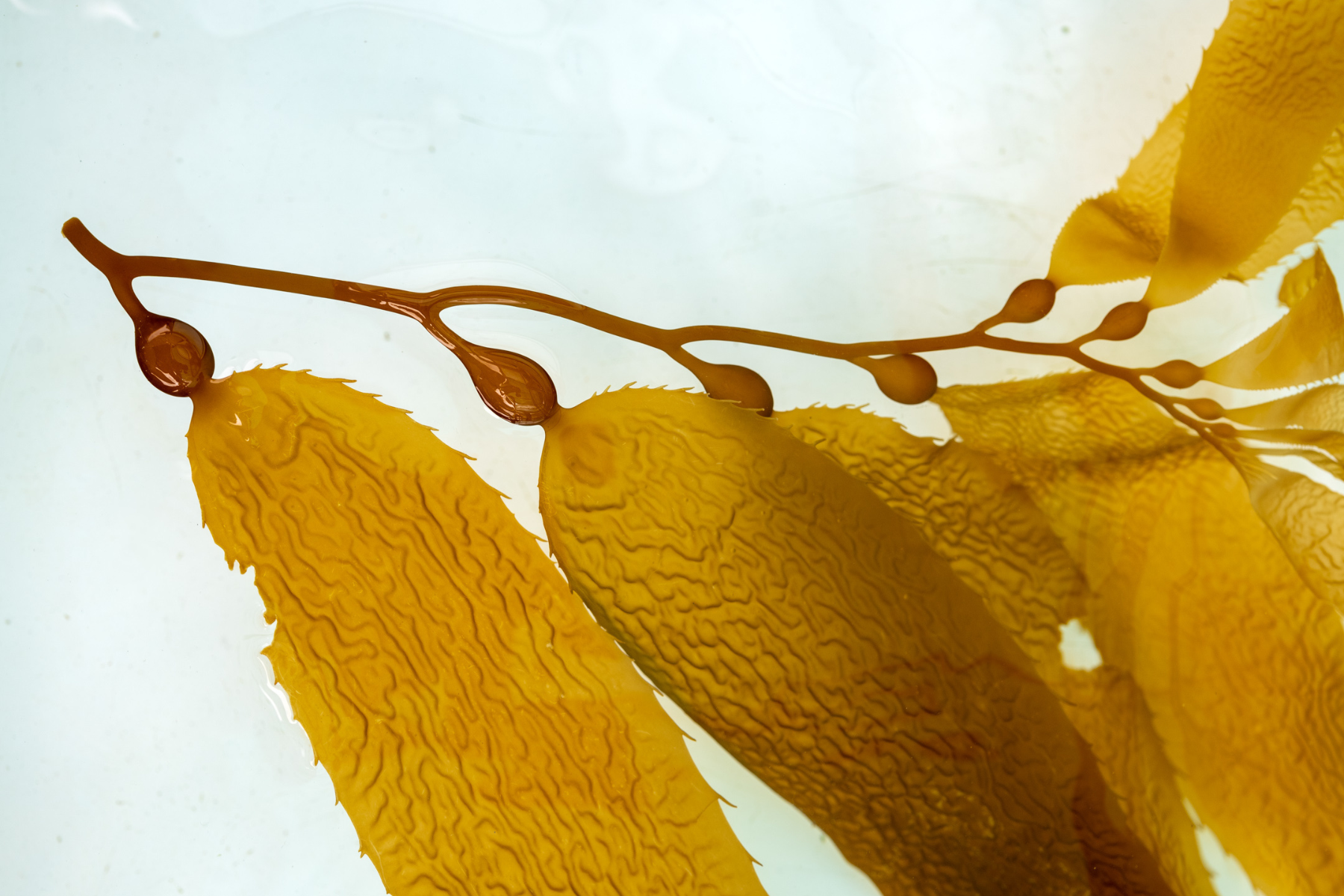
“Local chefs are dying to get their hands on more fresh, local seaweed,” said Scripps Oceanography researcher Jennifer Smith. “Chef Drew Deckman,” sustainable fisheries advocate and Michelin star recipient, “tells us he’ll buy all of it!” Chefs adore seaweed for its crunchy, salty, umami, and colorful qualities, and it gives dishes that certain seaside flair. Smith’s lab is currently experimenting with seaweed aquaculture in saltwater tanks—on land!
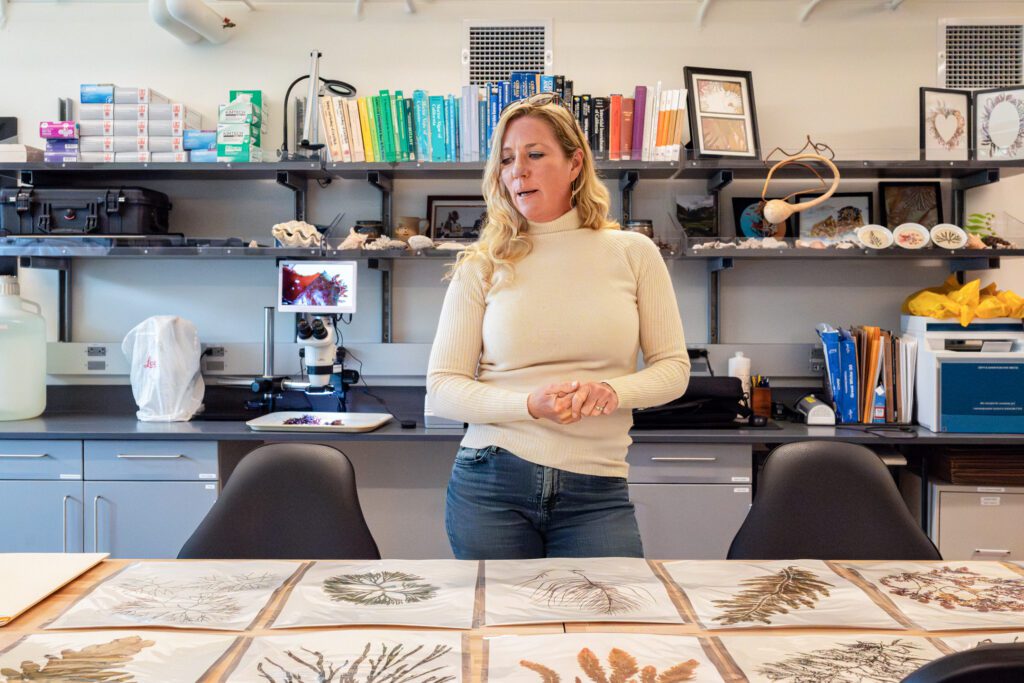
Local, ready-to-buy edible seaweed is not easy to come by, despite San Diego’s coastal location. Commercial offshore aquaculture permits are hard to get, while wild harvesting is highly regulated and “not exactly safe near shore,” said SDSU seaweed researcher Dr. Matt Edwards. “Seaweed is like a sponge for runoff and pollutants in the ocean.”
Most seaweed we eat (or use in myriad products from toothpaste to soup) is dried and imported from Asia, where it’s a dietary staple and in-water aquaculture is well established.
A $33 million import-export deficit and a multibillion-dollar worldwide industry means there’s a huge opportunity to develop domestic production and markets. Our coastal state is a bit behind when it comes to growing seaweed—Maine, Massachusetts, New Hampshire, Rhode Island, Connecticut, New York, Alaska, and Hawai’i are all ahead.
Seaweed is an excellent source of nutrition, and it grows faster than terrestrial plants. Cultivating it is not as taxing on resources as terrestrial agriculture—no soil, no fresh water, no fertilizer, no pesticides. But most US consumers are not accustomed to eating and cooking with seaweed, so it’s up to chefs, researchers, and entrepreneurs to figure out how to increase the supply of, and demand for, this potential superfood.
Seaweed Jacuzzis
Smith’s “jacuzzis,” as she jokingly calls them, are literal incubators for edible fresh seaweed aquaculture in San Diego. Just a few steps from the ocean, hot-tub-sized tanks bubble with filtered seawater while ogo, dulse, sea lettuce, and sea grapes tumble with the “current.” A constant stream of air circulates water around the seaweed to mimic a nearshore habitat. “Land-based seaweed farms—a.k.a. tumble culture—are the most effective way to expand this industry in our region,” said Edwards.
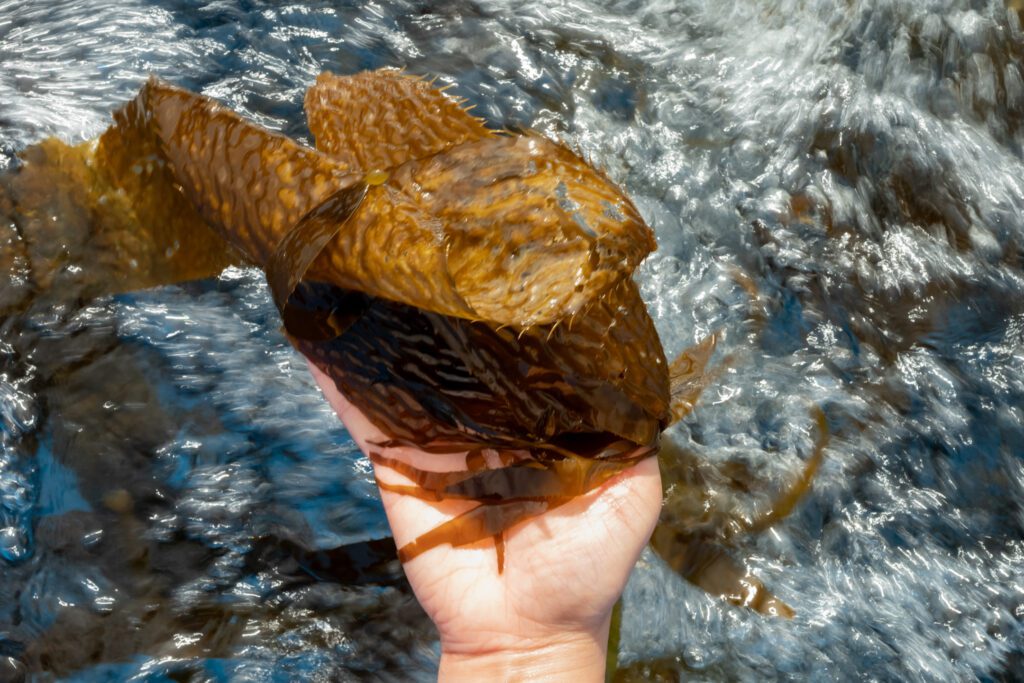
Meanwhile, in-ocean seaweed aquaculture in California waters is bogged down by the requirement for an Environmental Impact Report “that can cost up to $200,000—and isn’t guaranteed to pass muster,” said Edwards. To make it more complex, the current California Department of Fish and Wildlife permitting process for commercial in-water seaweed farms is tangled up with finfish and shellfish. “And,” he added, “huge offshore seaweed farms like those in Asia would never happen off La Jolla or any of our coastal towns. It would change the character of the coast.”
In contrast, barriers to land-based seaweed aquaculture are few: “All you need are tanks, sunlight, and seawater,” said Smith. “And seaweed babies to get started.” But seaweed hatcheries and seed banks don’t readily exist on the southern US Pacific coast. As of 2024, California has only four active seaweed aquaculture farms: two commercial operations and two pilot programs. Three of them provide seed stock—two for food, and one for research.
That’s where Edwards comes in. With grants from the National Oceanic and Atmospheric Administration (NOAA), Edwards
is part of a team developing nonproprietary modular hatchery technology and brood stock to make start-up more affordable. The hatchery device is a two-foot-tall portable cylinder with an inner light, and “will work with most any type of seaweed,” said Edwards. Just add spore solution and seawater, switch on the light, and sporophytes develop cozily inside the cylinder. Then they can be transferred to land-based tanks or attached to in-water lines.
“There’s a huge amount of opportunity here in San Diego and Southern California,” said Edwards. “We already have a great infrastructure in our state for processing, packaging, and distributing produce. It wouldn’t be hard to add seaweed.” San Diego’s nutrient-rich water, maritime industry, proximity to markets, and local interest in nature-based solutions are all assets that can help seaweed hold fast (pun intended!) as a successful product. Relatively minor hurdles include permits for seawater discharge on land, FDA preventive controls for operations over $1 million, and packaging that preserves freshness and is environmentally friendly.
The Star of the Show
Monterey Bay Seaweeds, one of California’s commercial seaweed operations and a partner in developing the hatchery device, grows a variety of species in tanks and ships fresh to restaurants throughout the state, a model Edwards hopes to emulate in San Diego. Monterey Bay Seaweeds are on the menu at Valle and Wrench & Rodent in Oceanside.
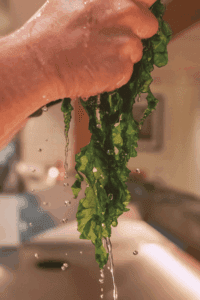
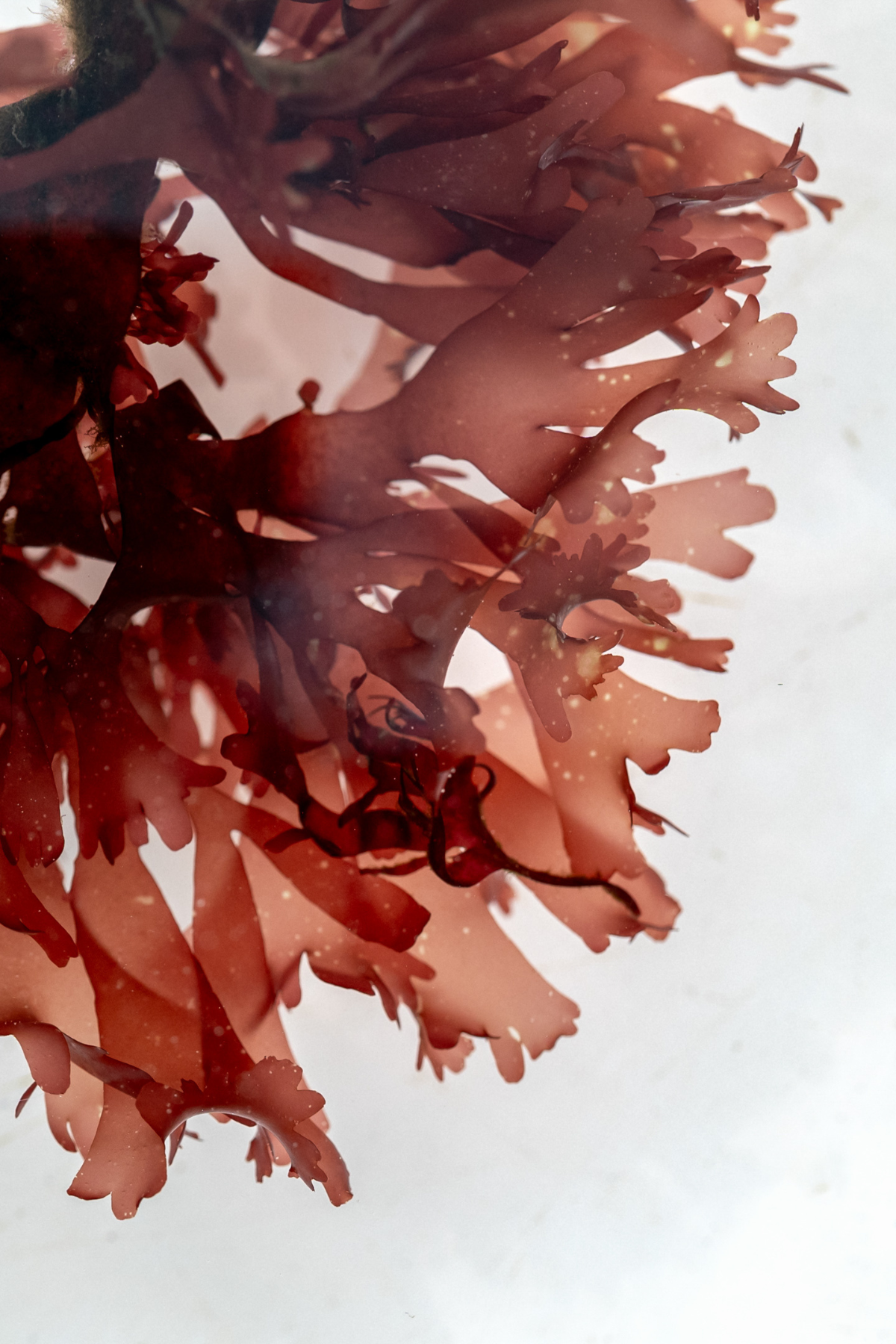
“Sea lettuce could be profitable, and ingredients like red algae appeal to higher-end restaurants. And it’s been said that dulse—a ‘meaty’ red seaweed—tastes like bacon,” Edwards chuckled. “I like to use seaweed seasoning instead of salt,” said Smith. “It’s higher in nutrients,” like B12 (not found in land plants), iodine, and fatty acids. Dulse and sea lettuce are good sources of fiber and protein. Red ogo, a deeply hued, bushy variety of Gracilaria (harvested to make agar used to thicken foods like soup and ice cream), “has a nice crunch and salty flair when it’s fresh,” Smith said. It just might be her favorite.
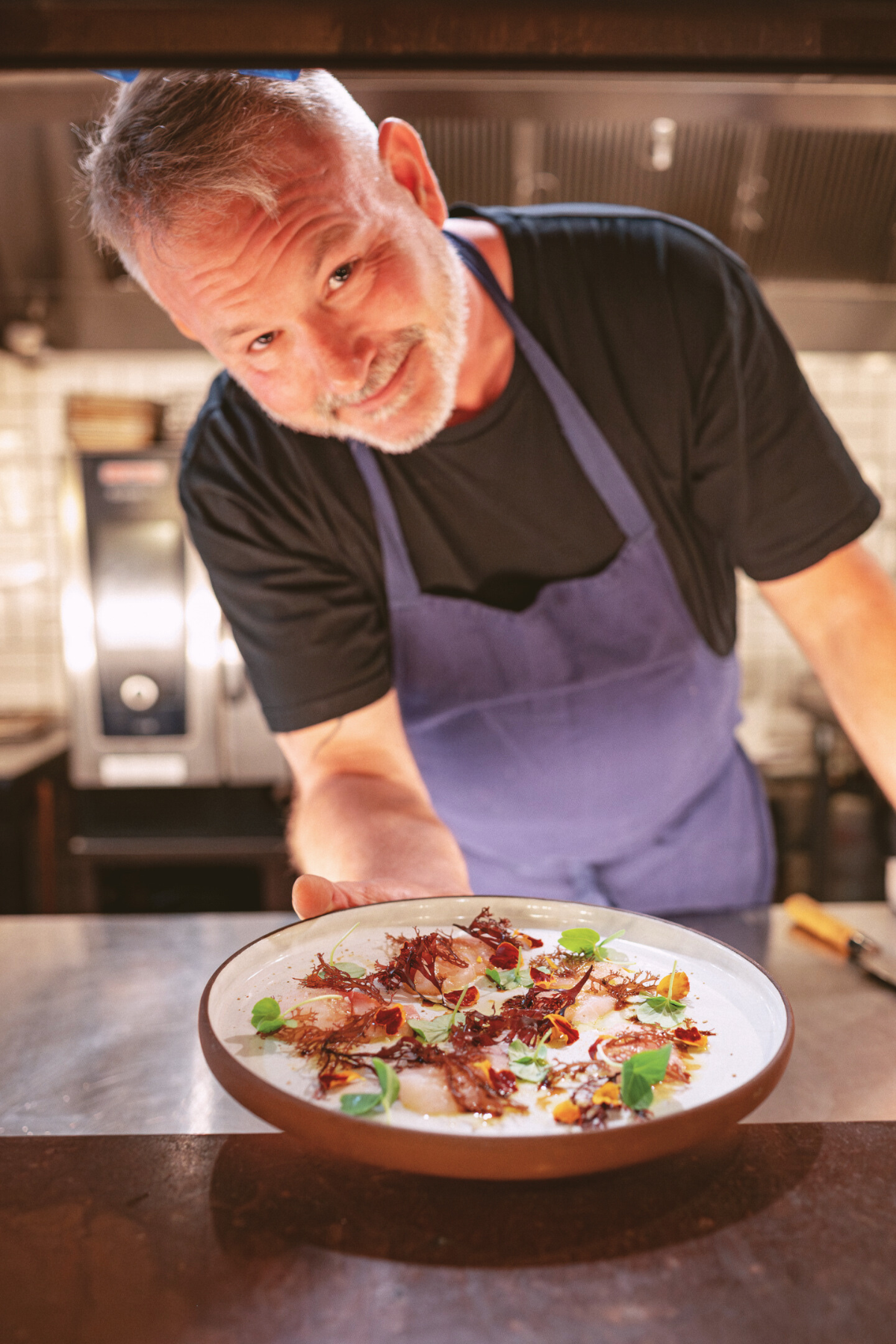
Some San Diego chefs are exploring how to make US-farmed seaweed “the star of the show,” rather than a garnish. Chef Claire Bastarche of Fox Point Farms and Berry Good Food’s chef Christina Ng partnered with California Sea Grant to develop recipes using bigger bunches of seaweed. There’s puttanesca and whipped cream cheese featuring winged kelp; brightly colored ginger-garlic pickled ogo and a bloody Mary using the pickle juice; and chili crisp made with dulse—to name a few. Chef Ng even figured out how to work sugar kelp into a savory cheddar loaf. Find these recipes and an ocean of information about the US seaweed industry at Sea Grant’s Seaweed Hub.
Algal Potential
In the 35 years he’s studied seaweed, Edwards said funding has grown exponentially in the last 10–15. In addition to studying seaweed for food, many federally funded projects focus on bioremediation. That spongelike quality could make seaweed an effective filter for polluted waterways—already in progress in Maine and currently part of an experiment supported by the Port of San Diego’s Blue Economy incubator. Sunken Seaweed, now in Humboldt, started growing sea lettuce at Grape Street Pier in 2017 to explore its potential for removing pollutants. Ola Farms is continuing the investigations in preparation for a local culinary seaweed industry.
To expand aquaculture in San Diego by easing obstacles to industry entry, the Port of San Diego drafted a Shellfish and Seaweed Aquaculture Program in 2024. Possible farm sites include three in-water farms—Imperial Beach, National City Marine Terminal, and Zuñiga Shoals—along with three land-based operations: the former Kelco infrastructure (used for wild kelp harvest from the 1930s to early 2000s) southeast of Coronado Bridge, a gravel lot adjacent to Tenth Avenue Marine Terminal, and a warehouse east of National City Marine Terminal.
Elsewhere in California, shellfish farmers are studying the potential for seaweed as a profitable byproduct for human consumption, instead of viewing it as a nuisance. As a bonus, seaweed-shellfish tandem aquaculture could improve water quality for the bivalves as they grow.
“As San Diego and California consumers create demand for local seaweed, we’ll see the infrastructure start to build out,” said Edwards. Smith and Edwards agree that it won’t be long before we see San Diego-grown seaweed at markets and on menus in this seaside town.