





This is the first of a four-part series, one part of which will roll out every quarter in 2021, specifically focusing on how the local beverage industry is poised to change with the times (and with the tides, as is the case for desalination). By examining the origins of our region’s water usage, infrastructure, treatment, cost, and predictions for the future through sustainability efforts and political plans, we’ll begin to uncover how water affects San Diego agriculture—as well as local food and drink—in the past, present, and future.
San Diego’s relationship to water is complicated. As much as 80% of our water comes from outside the area, from sources like Northern California and the Colorado River, with only a small percentage supplied locally or through recycling efforts. Plus, with regional precipitation continuing to hit record lows while wildfires hit record highs, replenishment from the sky tends to be an unreliable source of regional hydration.
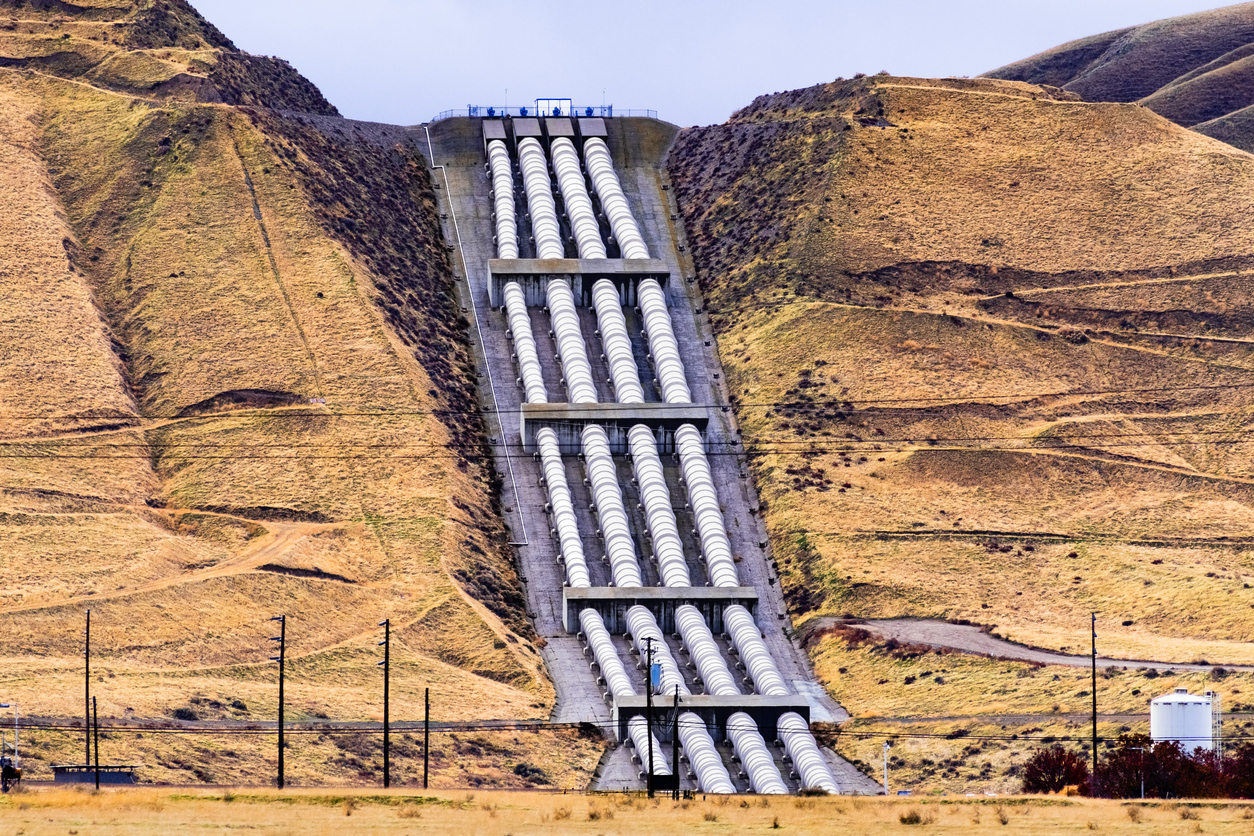
What does that mean for San Diego? It means we—and the rest of the southwestern United States—are naturally perpetually closer to being hung out to dry than we are to achieving a self-sustaining water system. As climate change continues to sizzle our agricultural efforts and requires continuous innovation of water acquisition, virtually every industry will be forced to adapt to the growing challenges. Even Wall Street anticipates shortages, recently adding water as a commodity for trade to “serve both as a hedge for California’s biggest water consumers against skyrocketing prices and a scarcity gauge for investors worldwide,” according to Bloomberg.
Overview of Water in San Diego
To understand the history of water in Southern California, let’s start at the beginning. Our primary source of water comes from the Colorado River, which the San Diego Water Authority disperses to over 3 million people through 24 member agencies as part of a $245 billion industry. Our arid Mediterranean climate necessitates water importing as the main source of procurement, but certain local water rights go back decades. One example: the Rincon Indian Reservation in the northeastern corner of the county pulls water from a nearby reservoir rather than from the municipal water supply. Water rights, especially in California, can be wildly complicated to both understand and acquire. But every morsel of food grown or raised in California, as well as every drop of drink made here, starts with access to water rights.

Agriculturally speaking, San Diego is perfect for crops like avocados, citrus fruit, and ornamental plants. According to the San Diego Farm Bureau, local agriculture provides a nearly $2 billion economic impact and the county has more small farms than any other county in the country, with more than 5,000 farmers spread across a quarter of a million acres. But water costs have forced farmers to innovate, including taking measures like doubling up on similarly thirsty crops like avocados and coffee, as Frinj Coffee has done. This interplanting optimizes output as well as diversifies farmers’ commodities, both essential steps for survival in such a drought-centric region.
Yet, in a multi-billion dollar industry, even single-digit percentage savings adds up to a lot of money. The San Diego Water Authority has pushed conservation efforts for years, which led to across-the-board decreases in residential water use. Still, without almost universal corporate buy-in of sustainability efforts, millions of gallons of water continues to be wasted with very little ability to locally replenish what’s lost.
How Local Beverages Use Water
Espousing farm-to-table values in food is practically passé nowadays, but the concept of farm-to-glass remains relatively murky in comparison. San Diego is home to 100+ wineries, 150+ breweries, 15+ distilleries, and a slew of meaderies, coffee growers and roasters, kombucha brewers, and even craft soda makers like Swell Soda and small-batch shrubs like Cool Hand Co. Like a lot of agriculture, beverage segments like beer use more gallons of water than what’s presented as the final product. For example, Peter Cronin, AleSmith Brewing Company’s quality manager and head of wastewater compliance estimates that AleSmith uses 5.8 gallons of water per gallon of beer produced, which is fairly economical for the craft beer industry. “I think the best usage is [Molson] Coors, which is around four gallons,” he explains. (Molson Coors is currently aiming to improve their water efficiency by 22% to “achieve a 2.8 hl/hl water-to-beer ratio,” according to their website.)


