KATIE: Why don’t we just go right down the line, starting with you, Maria? Why do you love wine?
MARIA: It’s fun. Wine is always fun, right? As I learn more about viticulture and winemaking, I respect the skill and craft involved and appreciate the benefits to our region in terms of the agriculture industry and land management.
HEIDI: I love that wine touches all parts of life. From nature to business to history to the future, wine has typically been an everyday staple on the table in homes. That’s what I love about it. I love wine.
ROXANA: I love wine for its complexity and for how unique it is. Grapes are like no other fruit, holding in perfect balance everything needed to become wine—sugar, acid, water, and wild yeast, without anything added. From this single fruit comes an amazing range of flavors, and they’re all shaped by the soil, by the season, and by the choices that the people who grow it make.
KATIE: Wine is many things to me—a tradition, an industry, and an experience. Personally, sipping a glass while I make dinner marks a transition from the workday to the evening, and wine makes a meal more special too. Whether I’m at home, out, or away, I always look for local wine. I’m curious about where it came from, who made it, and how the flavors complement what I’m eating.
KATIE: Second question: How would you frame why we’re making the special edition, Maria?
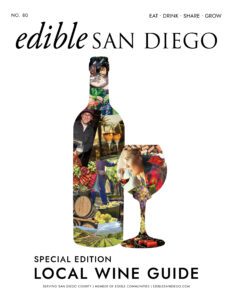
MARIA: Our publication talks about craftsmanship in all things culinary, and it feels like a natural fit to also celebrate local wine. I grew up in Northern California, so I see the potential for the wine region here and an opportunity to reintroduce San Diego wines to the local culinary scene. What about you, Katie?
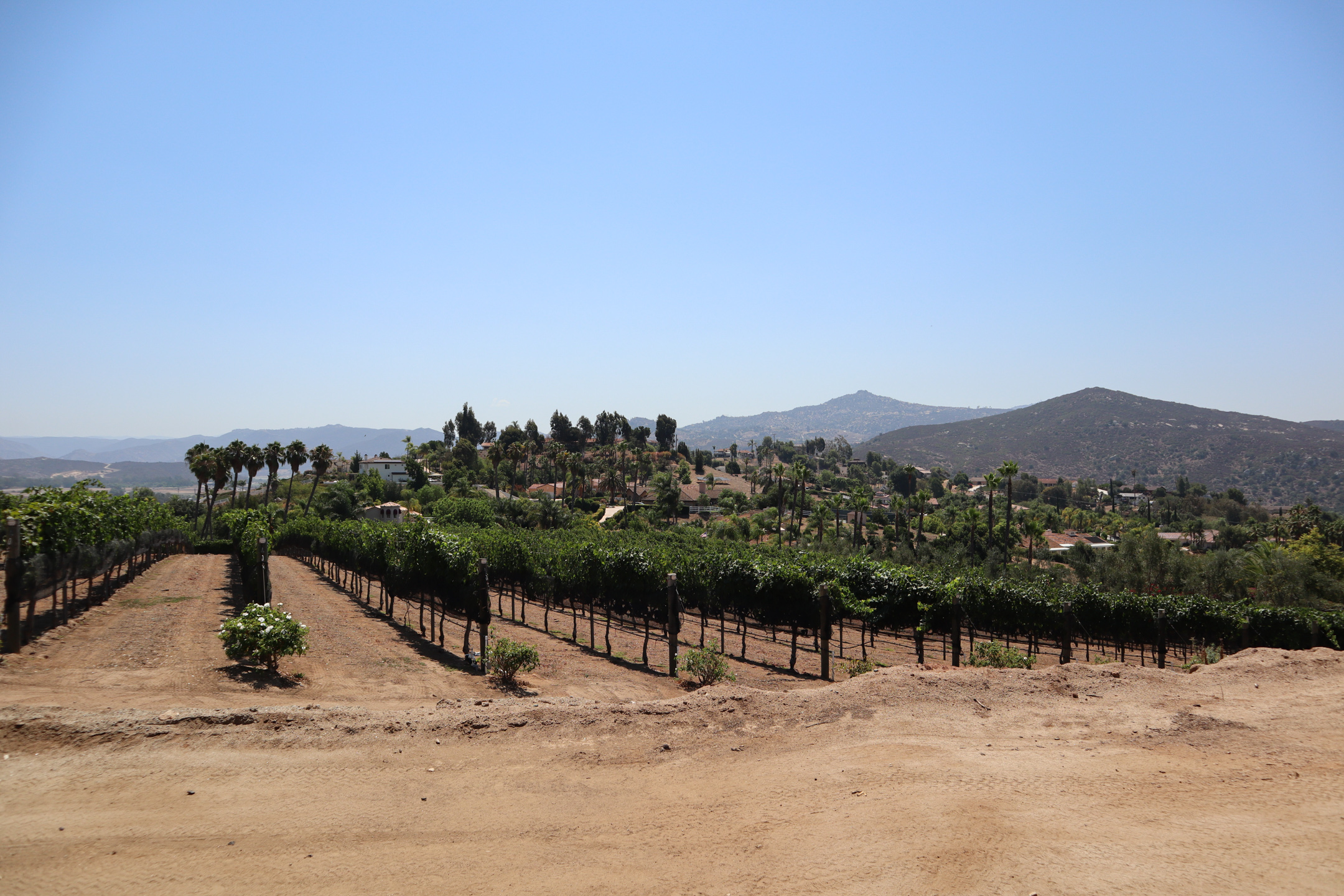
KATIE: As a starting point, I think it’s safe to say that most San Diego County residents and visitors—approximately 3 million and 30 million, respectively—are unaware that there’s wine made in San Diego County. This is why it’s so important for Edible San Diego to do a special edition all about it. Enjoying local wines here will take you out of the grocery aisle and onto the land, and once you meet the people who make these wines, it becomes personal.
KATIE: Let’s move on to our next question. We are excited to work with two talented wine professionals on this issue. Roxana, I’ll start with you. Why are you contributing to this issue as a guest editor?
ROXANA: For visitors from overseas, San Diego is a short trip south from LA. As we’re looking forward, promoting San Diego globally, including to visitors to the 2028 Los Angeles Olympics, local wine makes San Diego a more well-rounded destination. I’m excited about this special edition benefiting businesses by promoting local wineries to both residents and future tourists. Maybe San Diego County isn’t a global wine country destination yet, but we have that potential!
KATIE: Heidi, how about you? What interested you in serving as a guest editor for this special edition?
HEIDI: Well, about eight years ago, I was inspired to become an advocate for locally grown wine, partially because of my friend Tami Wong. She is probably the biggest and most visible advocate for San Diego-made wine. I’m here to help motivate people to check out local wines just minutes from their neighborhoods.
MARIA: We have so much we want to discuss and explore about local wine. Even though we won’t be able to cover them all in this issue, do you have any topics you wanted to put out there for future coverage?
HEIDI: Let’s talk about scale—the positives and the challenges. I think that producers who are farming and growing their own grapes on a relatively small scale make better margins when they sell directly to customers. The strategy of being a boutique winery can be a great choice for both winemakers and for wine drinkers.
Technology and laws on interstate commerce are factors. If you live in California, you can buy a lot of wines online, but that’s not true for every state. Also, can we talk about alternative packaging?
ROXANA: I’d like to look at the guest experience at tasting rooms and wineries. As a restaurant owner, I consider every part of a customer’s experience. It’s a competitive space to attract returning customers. I also vote for exploring natural wines, which we focus on at allmine. Most wine drinkers have no idea how many additives some wines have.
HEIDI: I’d love to focus on local success stories. For instance, J. Brix sources some grapes locally, and they have a global footprint, in Paris and London. Los Pilares has a national footprint, even though they do small-scale production.
ROXANA: One last suggestion: We also need to talk about transportation. While San Diego isn’t a huge county, it’s big enough that wine tour services make a lot of sense.
KATIE: Excellent. We’ll finish with your takeaways from the issue. We live in a world where retailers and restaurants mostly sell wine from everywhere else. Given this reality, Maria, what would you want readers of this issue to take away?
MARIA: I’d love readers to take away an incentive to explore and get to know our wine region. I know it’s not a destination wine region yet, but neither was Napa, Sonoma, SLO, or Santa Barbara at one time.
HEIDI: I would like readers to know that not every producer is producing the same style of wine, so if they visit one winery and think, “Oh, it’s not really like my cup of tea; I prefer something else,” there’s another producer, in a different area of the county, that’s doing something different. There are so many grapes and styles of wine here, I’m sure that everyone can find something they’ll enjoy.
ROXANA: Two things. If people are doubting that our region can produce great wine, remember that the entire Mediterranean region in Europe produces world-famous wines, and we have the same climate. Also, even though San Diego is the birthplace of California wine, a lot of the wineries are younger and more experimental, which is awesome. I would like to make a couple more points. One, while drinking local wine is a pleasure, it’s also an investment in the local community. As a small business owner, I keep going back to keeping money in the community! Every bottle made and enjoyed here keeps money in the county, supporting jobs and sustaining small businesses. When wineries thrive, all those benefits ripple to the farms, to restaurants, to tourism, to the economy, and to the culture of our entire region. Two, the wineries are relatively close. Today, all four of us live in different parts of the county, and it took us at most 30 minutes to get here, right? You can explore different wineries to meet different winemakers and find the wines you like.
KATIE: In my role as publisher, I hope this special edition offers a timely and enduring guidebook that gets dog-eared because people take it with them when they go wine tasting. We wanted to provide some basic information about wine in general, plus make the case for falling in love with local wine. It’s been such a privilege to work with each of you as we honor inventive local grape growers and winemakers. We’ll keep covering San Diego County wine because its time has come.