Community gardens won my heart while living in Washington DC. I was young, bouncing between shared apartments without a yard or open space to call my own, until I joined a community garden. They were a new trend in DC made possible by recent changes in city legislation.
Our family agreed that the property could be used for a community garden. But at their urging, I went to City Hall to ensure it was legal. At my first meeting, I was shocked to hear the Deputy City Manager at the time say, “This probably isn’t going to happen.” Even though the land had been purchased and used commercially in the 50s, the city classified it as residential in the 80s. A community garden, in the eyes of the city, was a commercial use of the land.
‘
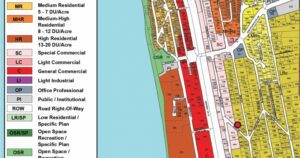
The black-and-red dot on the Solana Beach residential zoning map marks the property we tried to turn into a community garden. It is solidly within the yellow-shaded area denoting ‘single residence’ zoning, a restriction imposed on the land thirty years after its purchase. CREDIT: City of Solana Beach
This classification meant we’d have to apply for a ‘Conditional Use Permit’ in order to use the land for something other than a house. Conditional Use Permits are usually applied for by developers and homeowners with deeper pockets than mine and cost thousands of dollars. However, paying for the permit wouldn’t guarantee the project’s approval.
On top of that, a portion of the property would have to be converted into parking spaces for gardeners because of city zoning laws for commercial use. The street parking directly in front of our property wouldn’t count, because it already counted for Cedros Design District’s parking.
City Hall was sympathetic to starting a community garden but they were hamstrung by the city’s Zoning Code. The code didn’t include wording that allows for or regulates community gardens and ours couldn’t be created without going through a regulatory process for commercial developers that is challenging to navigate for those outside of the commercial development industry. Not only that, but the lot was also six thousand square feet too small to qualify for ‘agricultural use’ under older zoning laws that exist from the days when North County was more farm-based.
Community gardens provide an abundance of benefits to individuals and their communities. The current situation with recommendations to stay at home and worry over the nation’s food supply has renewed interest in community gardens along with the philosophy of “think globally, act locally.” Community gardens provide opportunities to learn about the growing cycle of plants, reconnect with the earth, provide food, and learn about the growing cycle. They support both the community of pollinators and reinforces the community connectivity of its gardeners.
With a surge in urban farming and community gardens in the past decade, it is startling to discover that despite access to land and a desire to start community gardens, efforts are often stymied by local zoning laws. Well-intentioned city-created zoning laws can make starting a community garden a discouraging experience in local citizenship.
San Diego County is a patchwork of city codes, some of which are more friendly to community gardens than others. A list of community gardens shows that schools, churches, and a few local businesses and nonprofits host a majority of San Diego’s community gardens. They have the leadership structure needed to start and maintain a garden. Additionally, they are more likely to have a property with an area that can be converted to garden use without disruptions to zoning codes.
Each of the seventeen cities in San Diego County has its own zoning code. And each has its own rules for establishing community gardens. For example, the city of San Diego allows community organizations to petition to allow community gardens on city-owned land. It has a program that allows owners of vacant lots to turn their land into a community garden in exchange for a reduction in property taxes. The program has already evaluated land throughout San Diego and identified over 3,000 viable vacant lots. If just one percent of these plots were transformed into community gardens, the city could double its number of existing community gardens.
Since the emergence of COVID-19, the Cooperative Gardens Commission (CGC) began working to increase local food production. CGC does so by connecting landowners with growers, helping first-time gardeners, and supporting already existing food sovereignty projects, farms, and community gardens.
This type of grassroots mobilization isn’t new to the American people. In fact, during World War II, twenty million US households produced food in Victory Gardens, with Victory Garden produce totaling over forty percent of the American diet in 1944.
Photo Credit: as3d
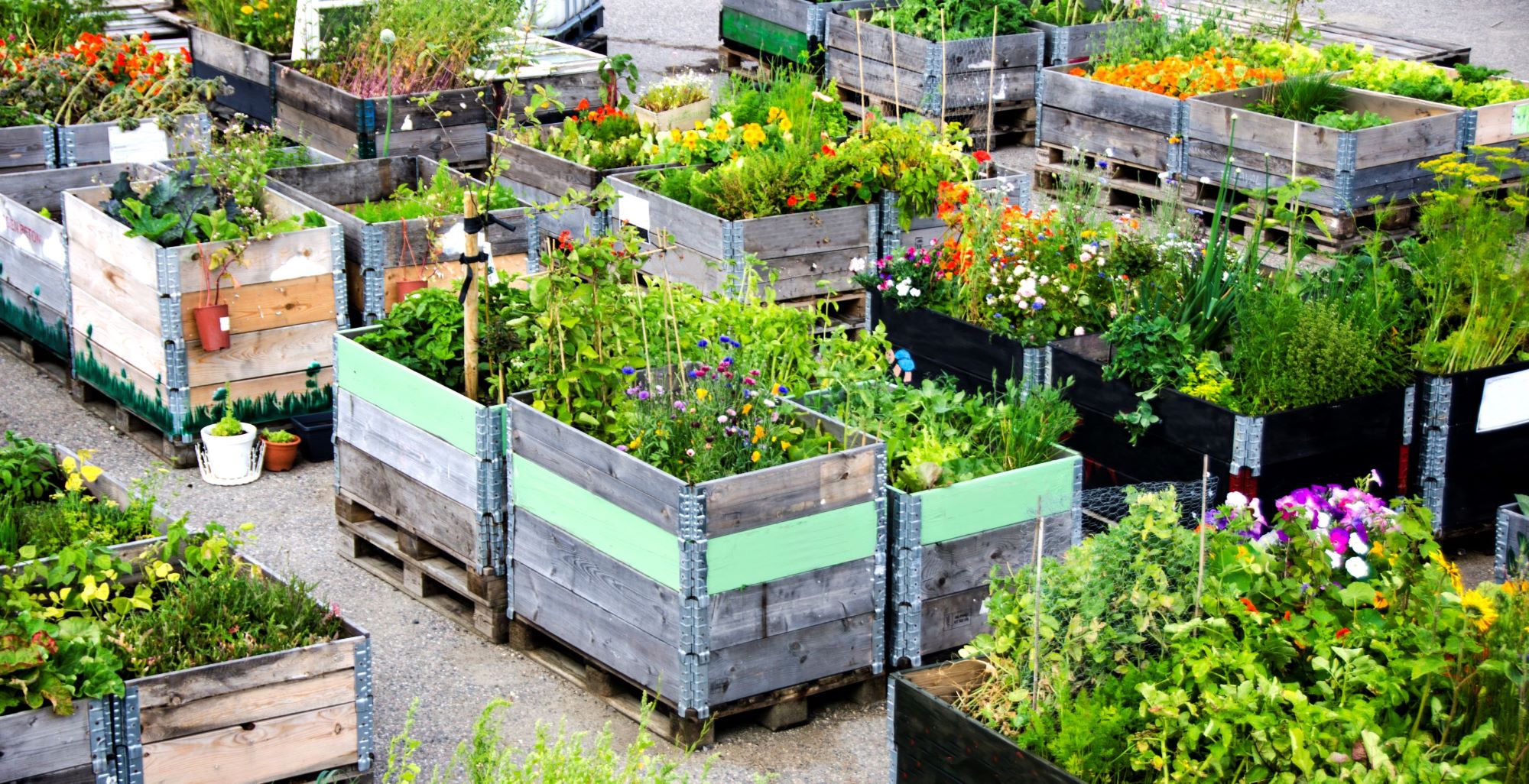
Just as this wartime mobilization sought to increase food security in the United States, gardening in polycultures (multiple crops are grown together) yields more produce than industrial monoculture (one crop at a time) farms. An example of this is the difference in harvest totals per square foot between small and industrial-sized farms. Small farms produce more profit per square foot because they plant a wider variety of vegetables. Meaning, community gardens, by their very nature, offer a higher yield of year-round vegetables than some of the industrialized agriculture that monopolizes our food supply.
San Diegans are ready for change. They’re embracing gardens and the widespread benefits more than ever. City zoning codes need to adapt to improve the lives of its citizens through these hard times.
Across California, efforts have been made to increase access to community gardens, which fulfill a wide swath of nutritional, environmental, and mental well-being. COVID-19 has made this an even more pressing issue. So these efforts need to be increased to keep up with our rapidly changing world.
Many possibilities could open up should timely legislation be passed. Currently, the laws, as they were written decades ago when the world looked quite different, hamper efforts to improve urban agricultural communities. Uniform zoning changes to encourage urban agriculture and community gardens during this time of global uncertainty are needed.
Photo Credit: Neustockimages
In the past ten years, the State of California has begun to lead the way towards easing restrictions around community gardens in urban areas. Zoning laws—the same laws that prevent someone from tearing down your neighbors’ house and turning it into a gas station—are the same laws that unintentionally prohibit community gardens in many jurisdictions.
Lawmakers are starting to make changes. The cities of Sacramento and Oakland have taken steps to expand property rights to allow for urban agriculture and community gardens in areas where they were previously blocked or hindered. By explicitly legalizing what many already believe is a right (to grow food for yourself and others with a property owner’s permission), these cities are removing costly conditional use permits as obstacles to community gardens.
Had this legislation been in place in my city, Solana Beach, I would likely be running a community garden today.
San Diego County and its numerous cities should follow the example of Sacramento and Oakland and implement these positive policies to expand property use rights in residential and commercial zones. These laws encompass where agricultural sites are permitted, how large they may be, whether or not they may sell produce, have chickens, and be open or closed to the public. They have been in place for several years elsewhere and demonstrate their effectiveness.
Community garden advocates have pushed the state legislature to go further. In 2014, they championed legislation that incentivizes the use of vacant and blighted lots by implementing a tax break program called UAIZ (Urban Agriculture Incentive Zone). This program taxes lots used for community gardens at the lower rate enjoyed by irrigated cropland. Lots have to be used solely for small scale agricultural use for at least five years. Given that urban land often has a higher tax bill, this can be a considerable tax break for landowners.
However, this legislation only takes effect when cities and counties adopt it in each jurisdiction and actively shepherd participants through the program. In March of this year, just a week before lockdown, the County Board of Supervisors voted to adopt this legislation. They joined the cities of San Diego and Chula Vista who had previously adopted it.
This legislation is more important now than ever. Development projects still in the planning stages are being put on hold, providing incentives for many properties to be used in the short term as community gardens. This could provide relief to landowners, developers, and their employees. Community gardens provide food, foster community building, and improve well-being in surrounding communities.
The time to act is now. San Diego has the tools to make it easier to start community gardens; we just have to use them. If you would like to help, contact your local city officials and ask them to adopt zoning regulations, if they haven’t already, that allow and support community gardens and urban agriculture.
Photo Credit: Jade Seok
Elizabeth Cramer
Elizabeth Cramer is a chef, plant lover, and potter. She loves teaching others how to cook and grow their own food. A San Diego native who spent her childhood within earshot of the Zoo’s orangutans, she now lives, like most millennials, with her parents. During this shutdown, you can find her in her garden trying to maintain her sanity.
Community gardens won my heart while living in Washington DC. I was young and bouncing between shared apartments without a yard or open space to call my own until joining a community garden. They were a new trend in DC made possible by recent changes in city legislation.
Our family agreed that the property could be used for a community garden. But at their urging, I went to city hall to ensure that it was legal. At my first meeting, I was shocked to hear the Deputy City Manager at the time say, “This probably isn’t going to happen.” Even though the land had been purchased and used commercially in the 50s, the city classified it as residential in the 80s. A community garden, in the eyes of the city, was a commercial use of the land.




 ‘
‘