


Photography by MARIA HESSE
Photography by MARIA HESSE
Photography by MARIA HESSE
On a soft San Diego morning, as the marine layer slowly burned away and a gentle chill lingered in the air, I found myself strolling through the Hillcrest Farmers’ Market alongside executive chef Ashley McBrady, her wagon rolling at her side.
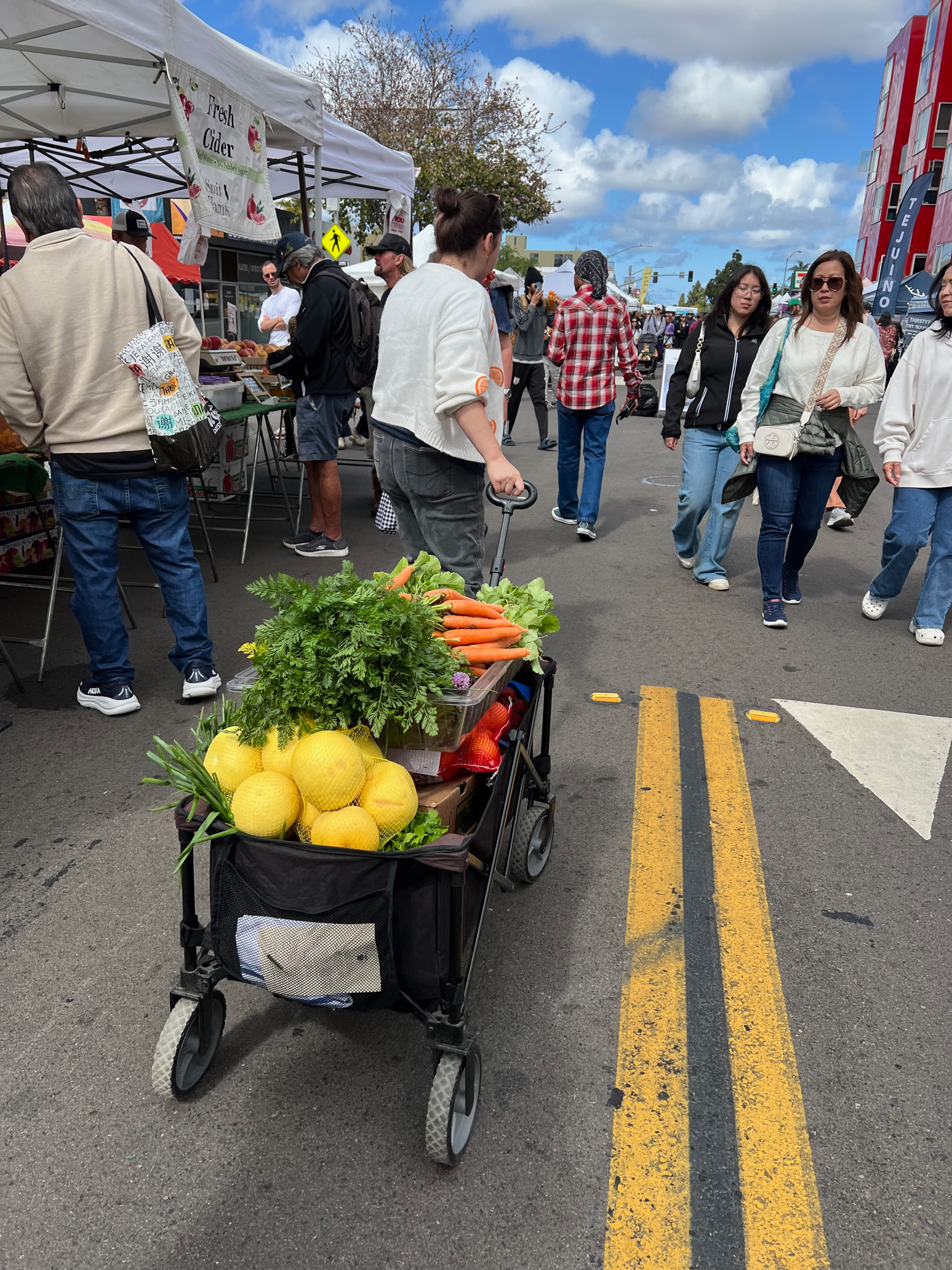
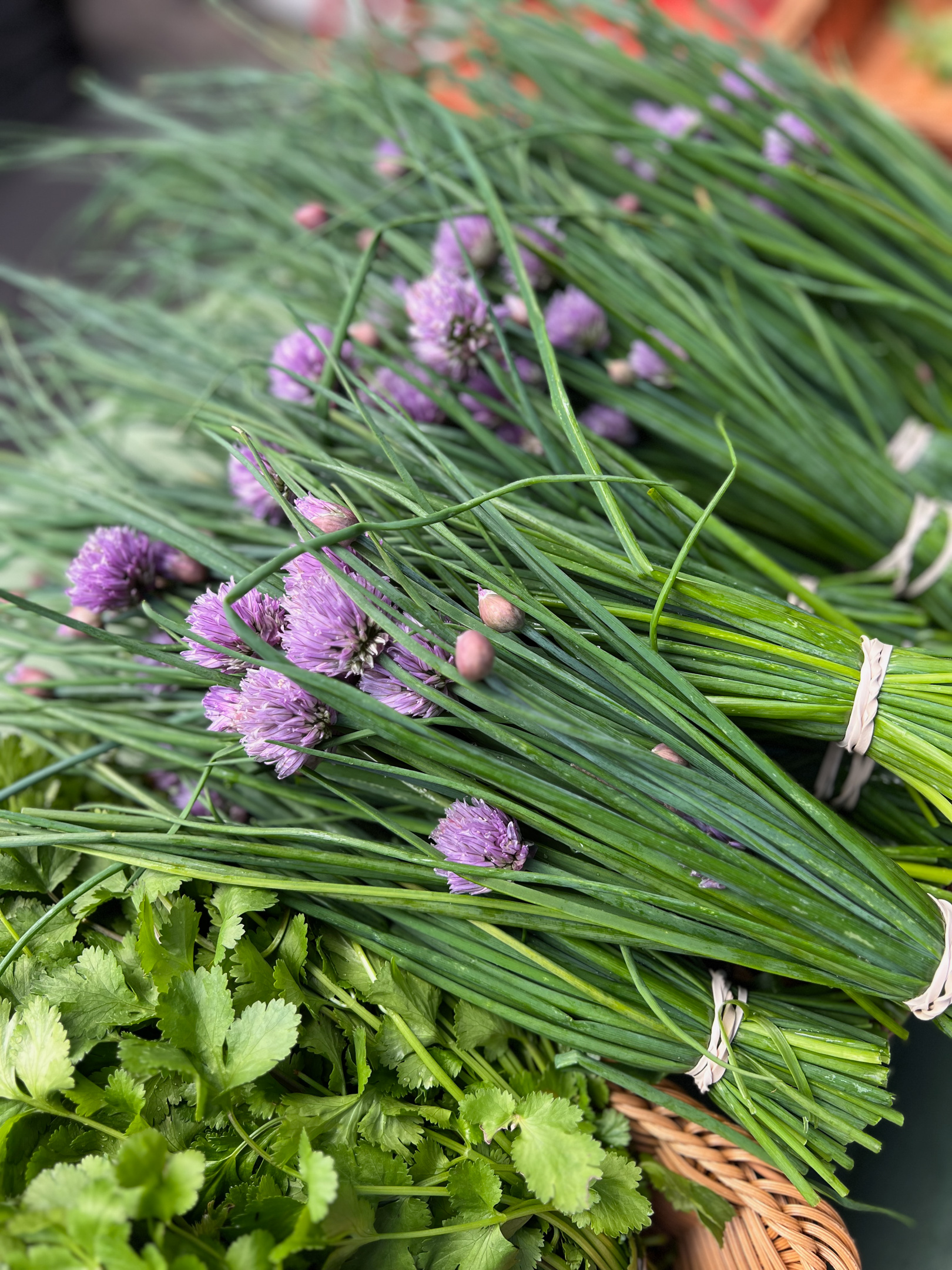
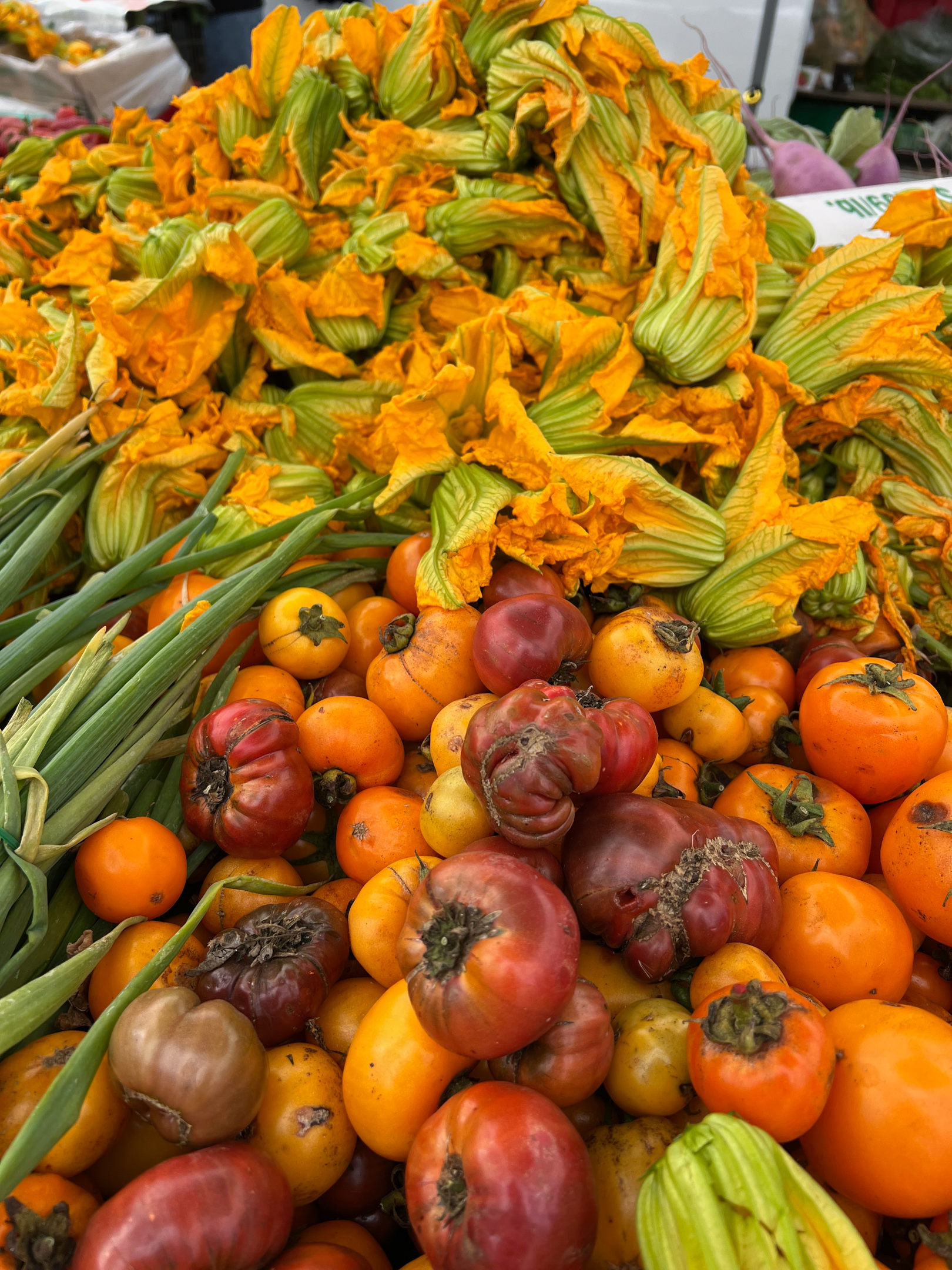
To an ordinary passerby, it looked like a typical Sunday market: bright tents, bountiful spring produce piled high on every table, kids tucked into strollers, and neighbors wandering slowly with sunglasses perched on their heads and fresh morning coffee in hand. But to walk beside Ashley (and her trusty wagon) was to see something entirely different—a living pantry gradually filling that wagon, and a web of relationships that pulse directly into Cellar Hand’s kitchen a few steps away.
As a chef-turned-food writer, I’ve wandered countless markets in my career. I’ve pushed carts through crowded aisles, scribbled menu ideas in notebooks, and felt that electric jolt of inspiration when a perfectly ripe, juicy peach lands in my hand. Yet this morning felt different. There was no rush, no list, no transactional urgency. Instead, Ashley moved through the market like someone visiting old friends.
At every stall, she paused to greet the farmers by name, leaning in to admire their latest produce as if it were something precious and new.
Conversations unfolded naturally—about their families, the week behind them, and what the coming days might bring to the market.
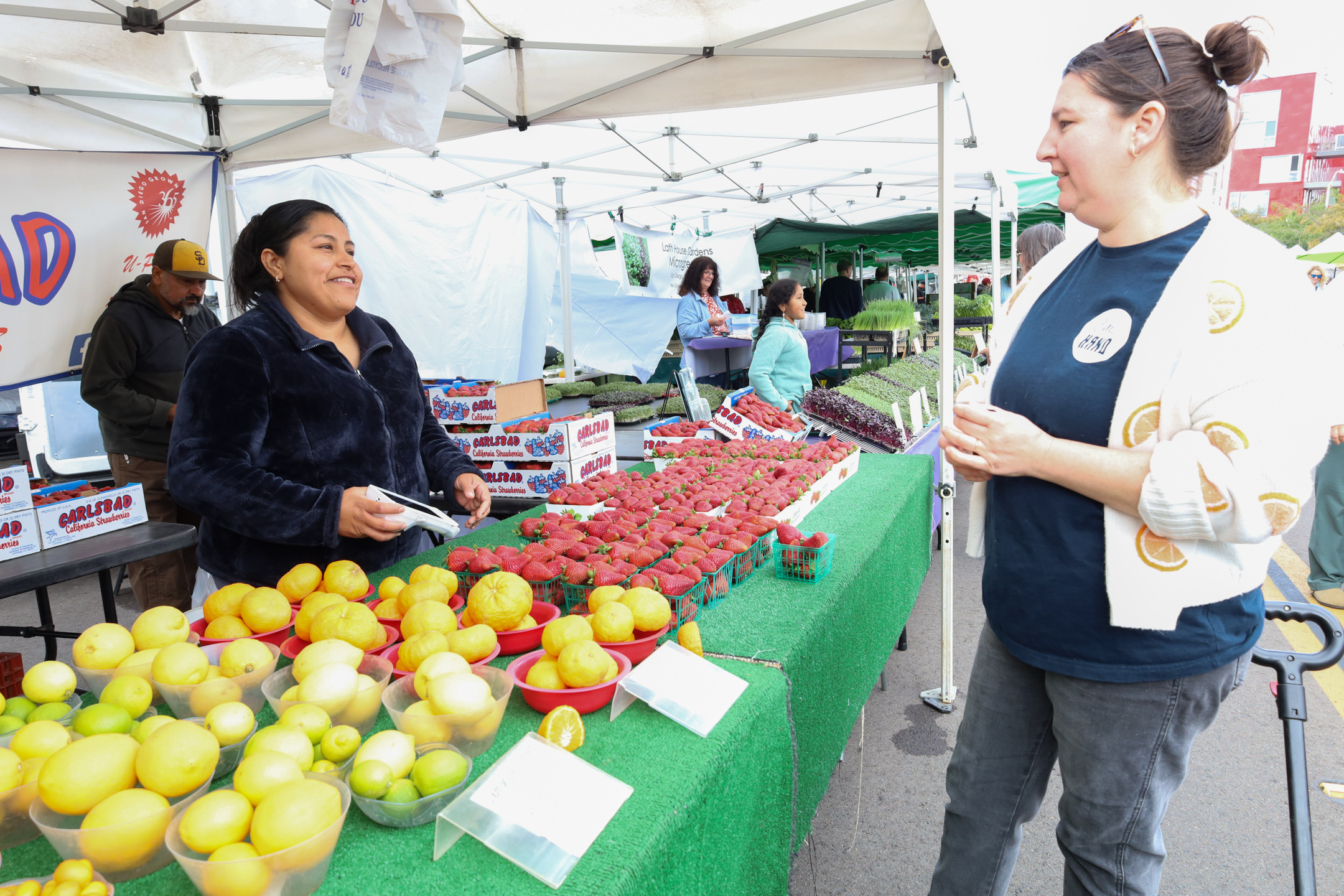
She cradled a bundle of radishes and talked thoughtfully about what dish they might become and why they mattered to her menu. A few steps later, she was laughing with another vendor over fava beans, debating how best to showcase them at Cellar Hand.
What struck me most was how deeply reciprocal these exchanges felt. This wasn’t a chef shopping for ingredients; it was a chef tending to relationships. Every conversation seemed to shape not only what would land on Cellar Hand’s menu, but how that menu would evolve over time.
And that’s the magic of being located within walking distance of a farmers’ market.
Cellar Hand sits close enough to the Hillcrest Sunday market that sourcing doesn’t feel like a special weekly errand—more like an extension of the restaurant itself. Unlike rigid menus planned weeks in advance, theirs lets the market speak first. What’s ripe today? What’s abundant? What farmer has something they’re especially proud of?
This philosophy is increasingly rare in a restaurant world dominated by convenience, consistency, and corporate distribution. So many modern kitchens rely on the same catalog of frozen appetizers, premade sauces, and mass-produced desserts that arrive in identical boxes nationwide. You can walk into chain restaurants across the country and see the same mozzarella sticks, the same cheesecake, the same industrial uniformity. Ashley’s approach couldn’t be further from that reality.
As we walked, she spoke about how she’s constantly “chasing farmers and fishermen around” to see what’s available that day. Sometimes that means rewriting a dish at the last minute. Other times it means scrapping an idea entirely in favor of something better that emerged unexpectedly.
From Thompson Heritage Ranch pork to pristine local seafood, Ashley sees each ingredient not as interchangeable, but as a story worth telling. That story becomes the backbone of Cellar Hand’s menu.
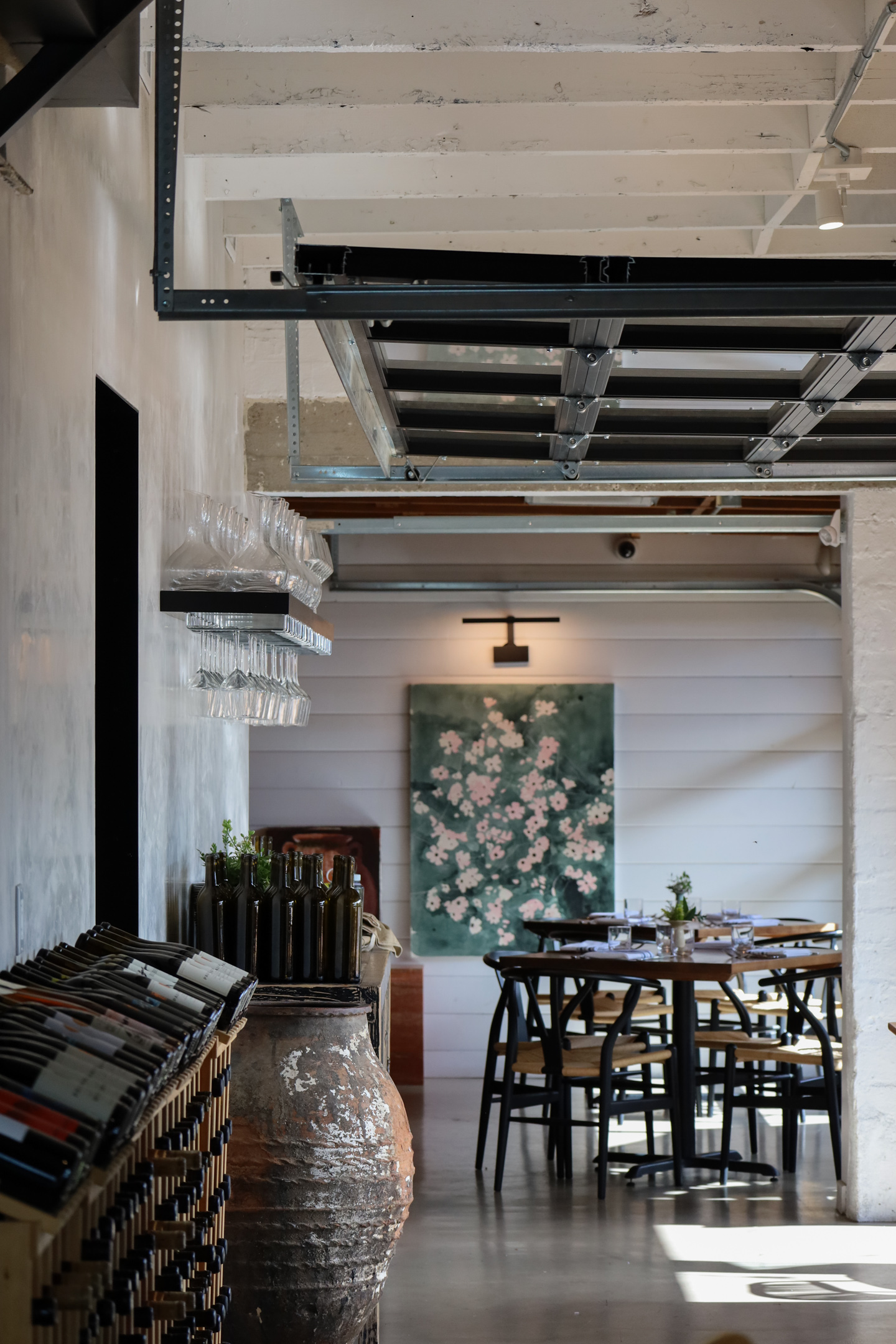
After our market tour, we slipped into Cellar Hand for brunch. The space felt warm, minimalist, and alive—tables buzzed with conversation against the steady hum of cooking in the background and pita bread baking in the tiny open-view kitchen.
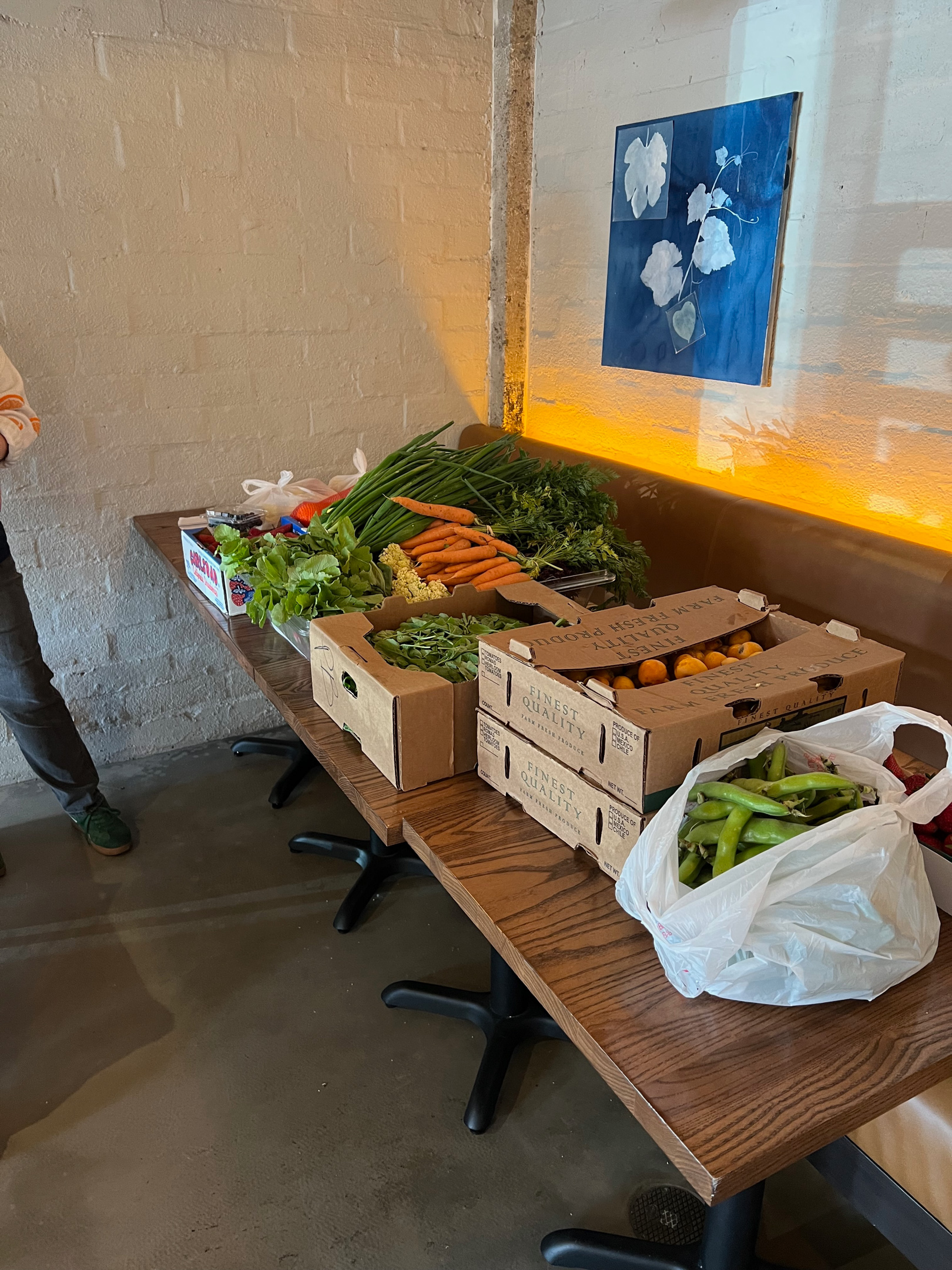
Over plates of vibrant seasonal vegetables, house-baked pita, and perfectly crispy bluefin tuna schnitzel, Ashley opened up about her creative process. Off to one side, she had arranged a small display of that day’s market produce for guests to see—an intentional gesture that invited diners into the story behind their meal.
She spoke with a kind of quiet passion that’s rare in leadership: humble, thoughtful, and deeply collaborative.
She and the cooks talked openly about what they saw at the market, what ingredients excited them, and what they wanted to experiment with. A dish might begin as a simple idea from a line cook, then evolve through collective brainstorming into something entirely new.
Sometimes the evolution is practical—what’s available, what’s in season, what a farmer has in abundance. Other times it’s more conceptual—how to showcase local seafood, or how to highlight the flavors of a particular rancher’s pork.
The result is a menu that feels alive, fluid, and deeply rooted in place.
One of the most striking things Ashley emphasized was how much they strive to make in-house. Not because it’s trendy, but because it matters.
From babka to pita bread, from pickles to preserves, Cellar Hand pushes itself to craft as much as possible from scratch. In an era when restaurants could easily outsource baking or rely on premade dough, Ashley and her team chose the harder path.
“We try to push ourselves all the time to make everything,” she said—a line that lingered with me long after brunch ended.
That ethos isn’t just about technique. It’s about integrity. It’s about honoring the farmers and fishermen who provide their ingredients by treating them with the care they deserve.
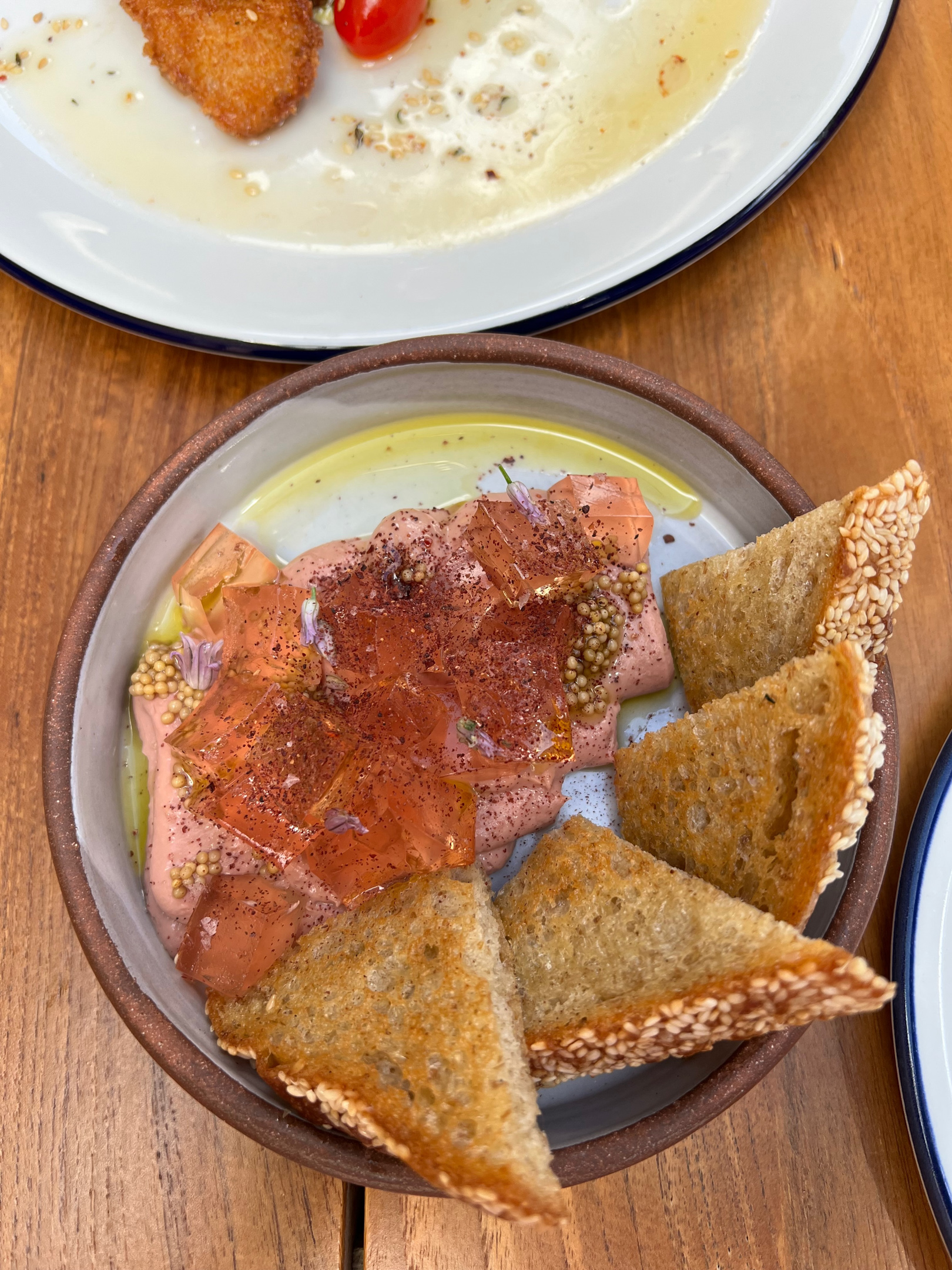
And nowhere is that more evident than in my favorite dish on the menu: chicken liver mousse with orange wine gelée, mustard seed, and seeded toast.
As someone who grew up on my grandmother’s chopped liver—served proudly at every family gathering—this dish hit me right in the heart.
Ashley explained that she first began developing a version of this dish at a previous restaurant, but it wasn’t until she arrived at Cellar Hand that it truly found its soul. The mousse is silky, rich, and surprisingly delicate. The bright citrus of the orange wine gelée cuts through the fat with elegance, while the mustard seeds add texture and bite. The housemade seeded toast feels purposeful rather than ornamental—a vehicle meant to carry every last luxurious bite. Beyond flavor, the dish tells a story.
Ashley wanted something that could connect Cellar Hand to its founders and their relationship with Pali Wine Co. in Santa Barbara County. The orange wine gelée is not only a clever garnish; it’s a bridge between vineyard, land, and plate. In that moment, I realized how intentional the menu is. Nothing is random. Every element exists for a reason—culinary, emotional, or relational.
As we finished our meal, the market outside still bustling, I reflected on what makes this kind of restaurant so special.
Cellar Hand’s menu weaves a community of farmers, fishermen, ranchers, winemakers, cooks, diners, and storytellers together. The kitchen’s deep connection to the Hillcrest Farmers’ Market isn’t about convenience—it’s about creativity.
In a city as rich with agriculture and coastline as San Diego, this relationship feels almost sacred.
Too often, local ingredients are invisible or forgotten. Even if we go to farmers’ markets, we might stroll past booths without truly seeing the labor, love, and risk behind each tomato or oyster. But restaurants like Cellar Hand remind us what’s possible when we pay attention—when we listen to the land, to the seasons, and to the people who steward them.
At the end of my meal, I felt grateful—not for a beautiful brunch, but for witnessing a model of cooking rooted in respect, curiosity, and connection.
This is a San Diego restaurant that lets seasonal farmers’ market ingredients lead the way.
Originally published in issue 82.

Jenn Felmley
Jennifer Felmley, known as Chef Jenn, is a highly skilled personal chef. With a love for gourmet cooking, healthy meal prep, and local food, her creations radiate warmth and excitement. Whether you need a personal chef, weekly meal prep, or cooking lessons, Chef Jenn offers customized menus and unforgettable experiences. Contact her today to turn your culinary dreams into reality or follow her on Instagram @chefjenncooks.


