


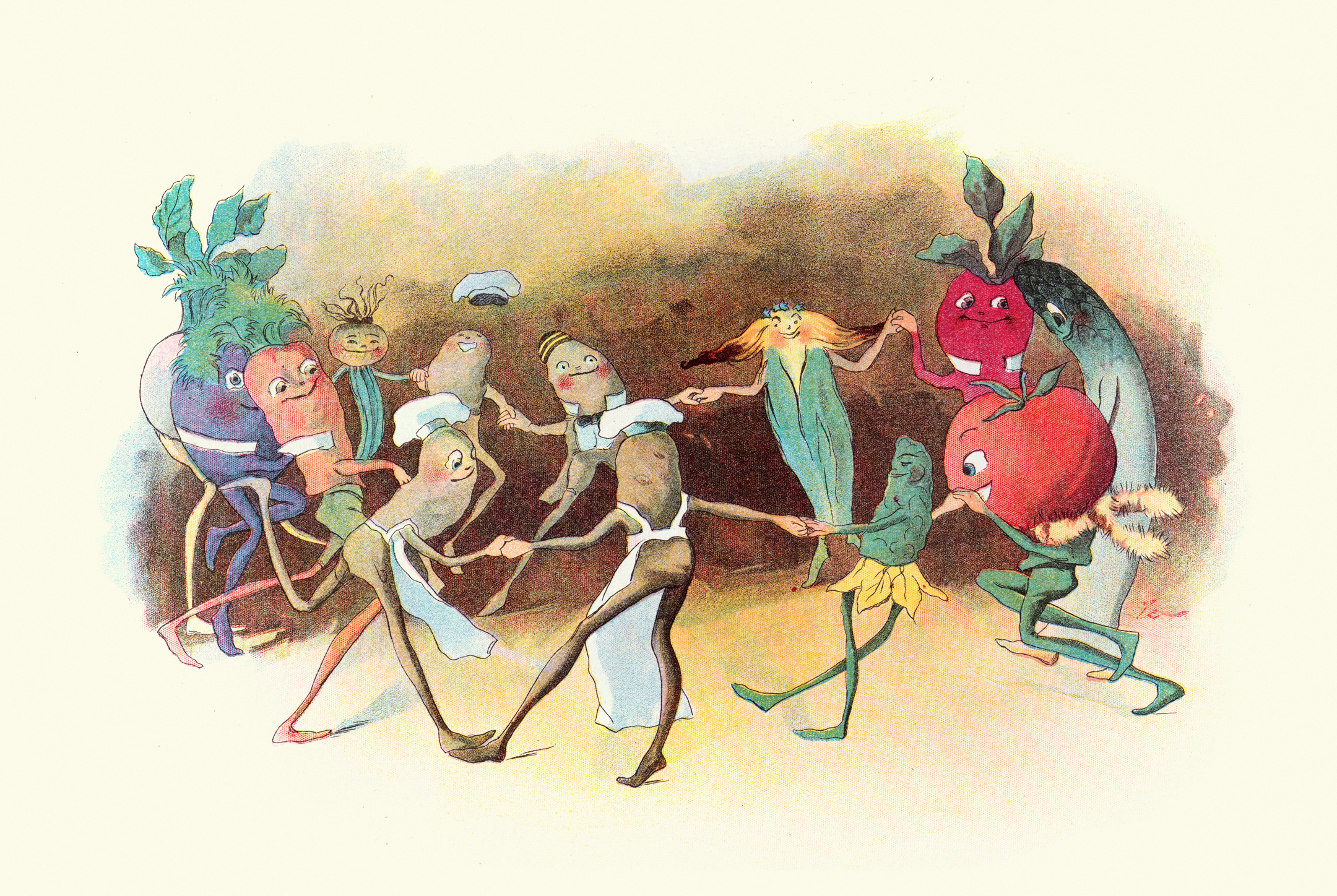
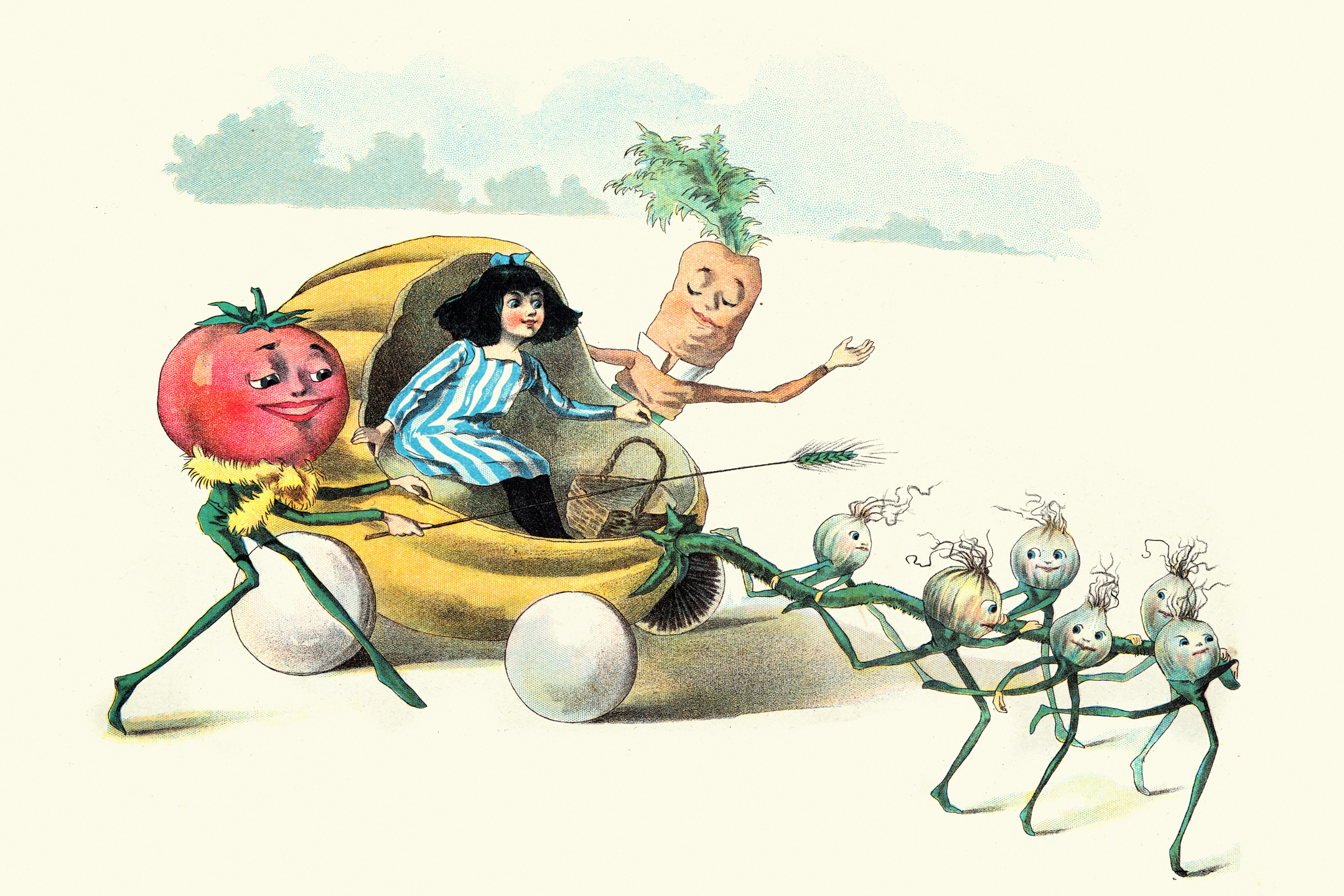
Photography by ILLUSTRATIONS BY FLORENCE K. UPTON, THE VEGE-MAN'S REVENGE, 1897.
So Edible San Diego is now accepting rants from farmers—well, there goes the neighborhood! All jokes aside, hear me out. Nobody will argue with me when I say food is a significant pillar of culture, along with art, dance, and song. Why, then, do we think we can garden alone and expect to flourish? Growing in a void, only reliant upon the local nursery, mega-convenience stores, YouTubers, and influencers works out about as well as the occasional online irrigation hose purchase that never ends up fitting right.
This is a call to start your own garden club—not headed by larger entities, not hosted by your local library, but started by you and your neighbors, fueled by whatever brings you together. The exchange of ideas, resources, and knowledge at a neighborhood scale will strengthen our unique garden culture and seed bank here in San Diego. These groups will be bound by one unavoidable constraint: time—the time it takes for plants to truly grow, and the time it takes for real bonds to form, building the strong roots and branches needed to weather an ever-changing world.
Here’s one way to do it.
In Sand Talk, author Tyson Yunkaporta dives into the steps Aboriginal groups go through to come to knowledge and work together in a way that endures and thrives. Through observations of groups all over the country, a pattern throughout emerged.
Those steps were:
- Respect
- Connect
- Reflect
- Direct
Once you’ve gathered your group (use your intuition from observing front yards—I am sure you’ll find the gardeners you vibe with), you can use these steps as a roadmap to guide how your group determines its form. First, build respect. Start with introductions, see each other’s gardens, and set boundaries where you need them. Next, connect. Find what can bring you all together (a small potluck, walks around the neighborhood, field trips to farms). Once you’ve met a few times and started to build trust, start to reflect. What commonalities have you found?
What are your diverse strengths? Finally, direct your garden club’s path. Here you can decide if you want to get a shared compost delivery for your summer garden. Direct the path you’d like to take for starting seeds together, swapping seedlings, or whatever unique needs you’ve observed during those times of meeting and building respect and connection.
The key is to choose the path of your garden club only after building respect, connecting, and reflecting.
When I reflect on Ranchito Milkyway, our farm, I realize that our favorite varieties have been those shown to us by other farmer friends. Our sanity is moderated by our ability to rely on other farms to grow amazing strawberries so we don’t have to. And our struggles that appear year after year are usually fixed much faster if we give our friends a call, with longer-lasting results compared to occasions when we relied on a dive into the depths of Google.
As gardeners in San Diego, we have the choice to participate in the development of our food culture or to let it be determined by the growing power of algorithms, optimizations, and seeds developed in growing zones far away. If you’re reading Edible San Diego, I have a hunch you already have something up your sleeve. Find your fellow gardeners, see what happens, and keep us updated with how it goes!
Originally published in issue 82.
BY ALYSSA AND CHRISTIAN FRUTOS
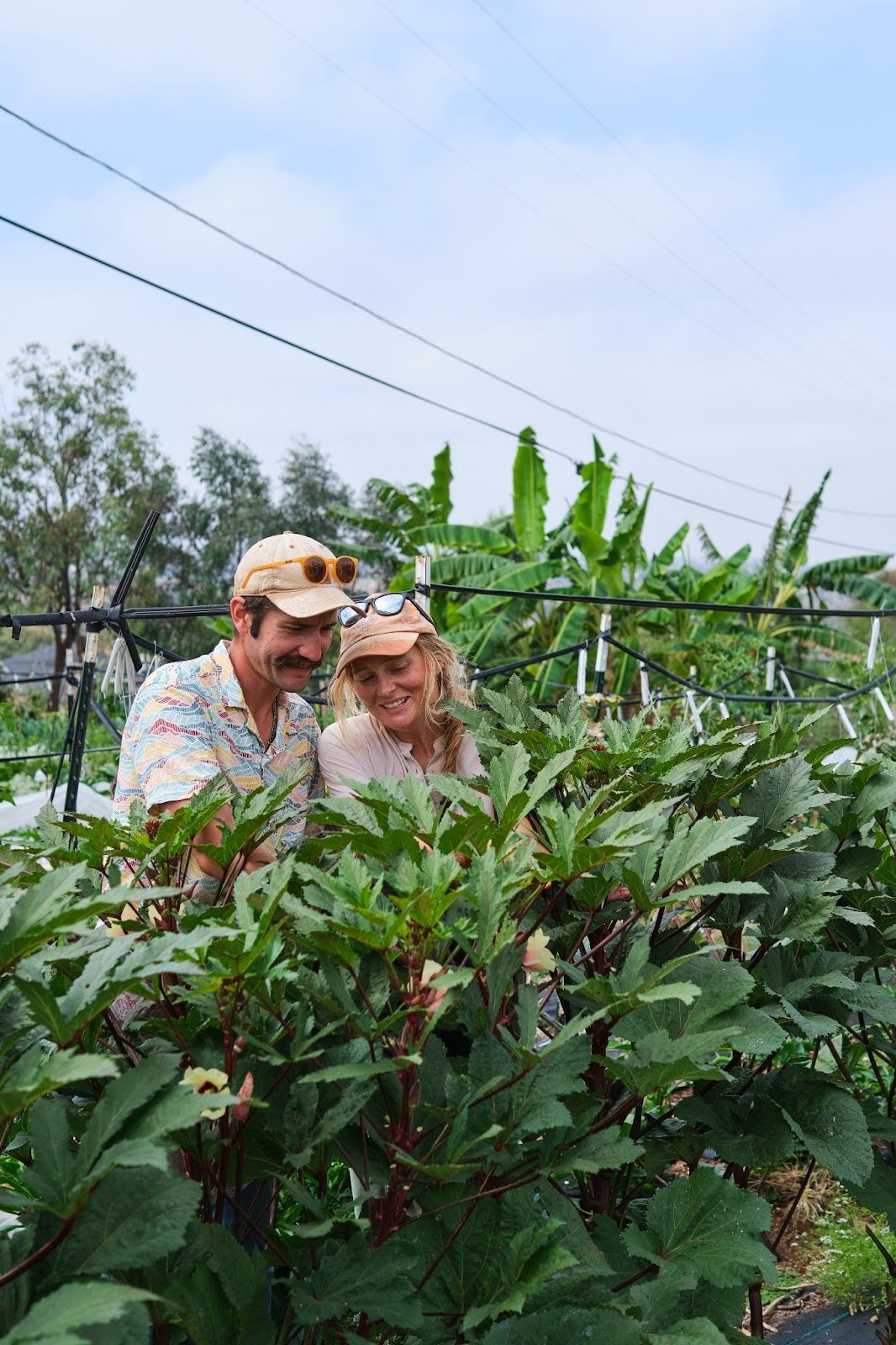
Alyssa and Christian Frutos are the farmers of the vegetables growing at Ranchito Milkyway. They carry a drive (sometimes mistaken as insanity) to feed healthy food to the people they love. In addition to the farm, Alyssa teaches Organic Gardening 101 at Southwestern Community College and the first lesson in the Master Composters course at The Living Coast. Ranchito Milkyway is a vegetable farm in Bonita with a focus on growing vegetables and connecting folks to their food and farmers. Join the newsletter at ranchitomilkyway.farm or follow @ranchito.milkyway.farmstand on Instagram or Facebook.


