


PHOTOGRAPHY BY LINDSAY WYNN COURTESY OF TAO OF CLAY
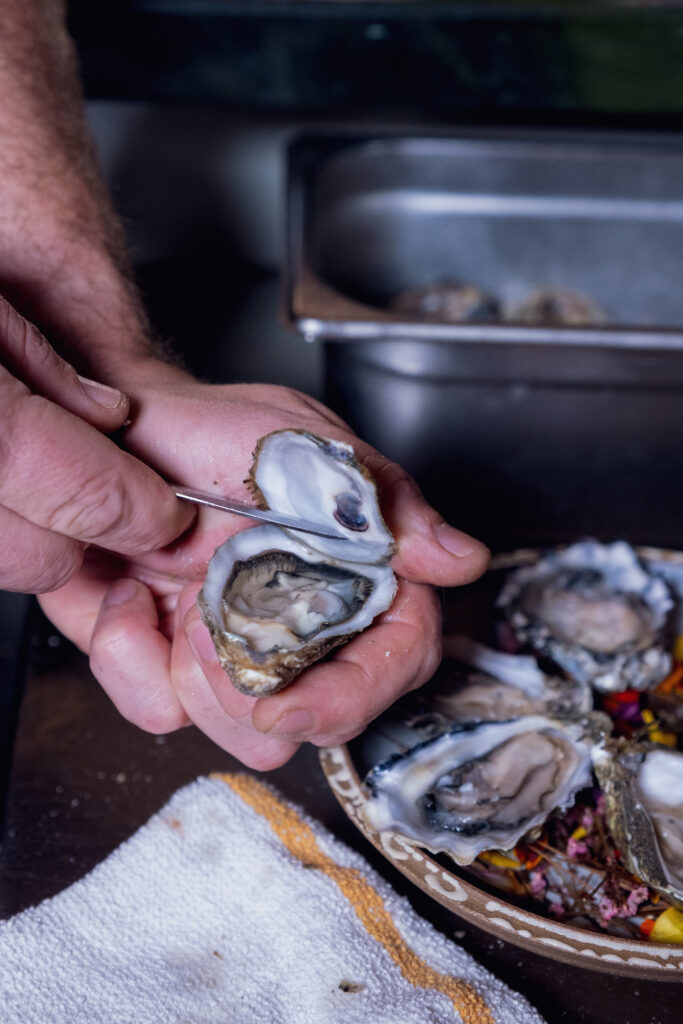
Oysters spend their lives building iridescent, protective bowls around themselves. Like a sponge, baby oysters draw seawater through their bodies, filtering out the ingredients they need to make calcium carbonate—the building blocks of shells and corals—the dishes of the sea.
What better vessel than an oyster shell could potter Ava DeCapri at Barrio Logan’s Tao of Clay have chosen to serve in its latest dinner series collaboration with North Park’s Mabel’s Gone Fishing? The Studio Table series’ August dinner was the third in a series of ticketed soirées that the ceramics studio hosts twice per year.
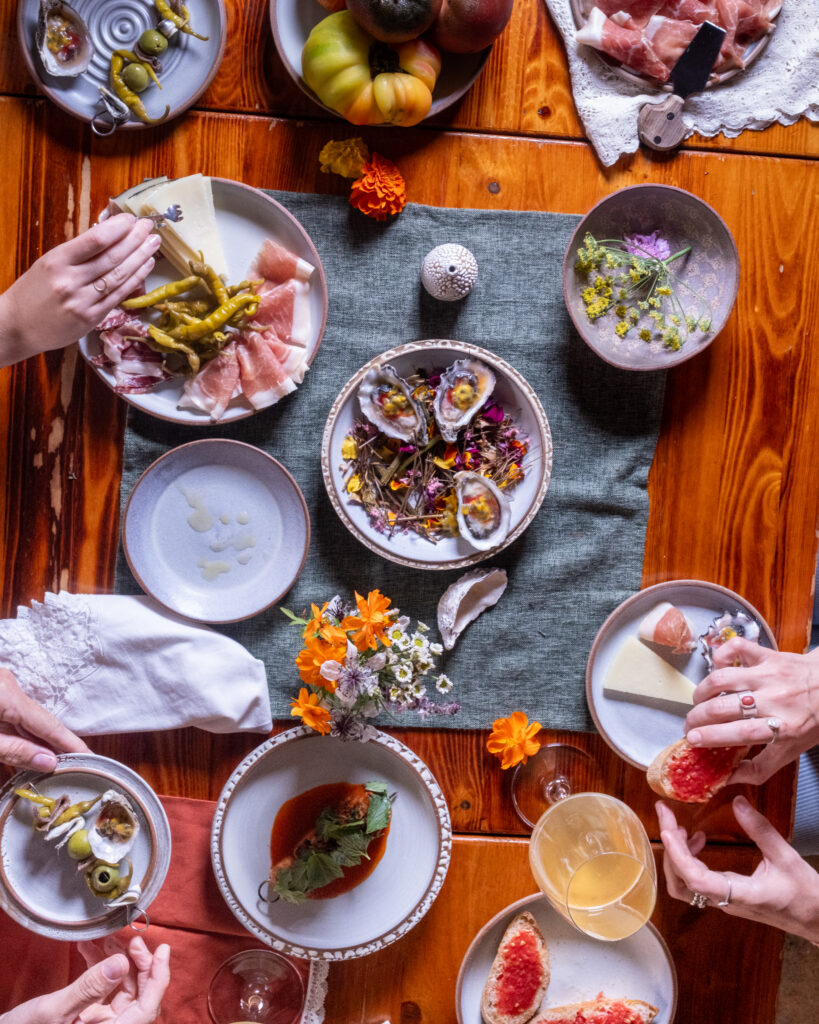
The intention this time around was to pair a chef with a ceramist so that the meal and the very plate on which it is served have been crafted for one another.
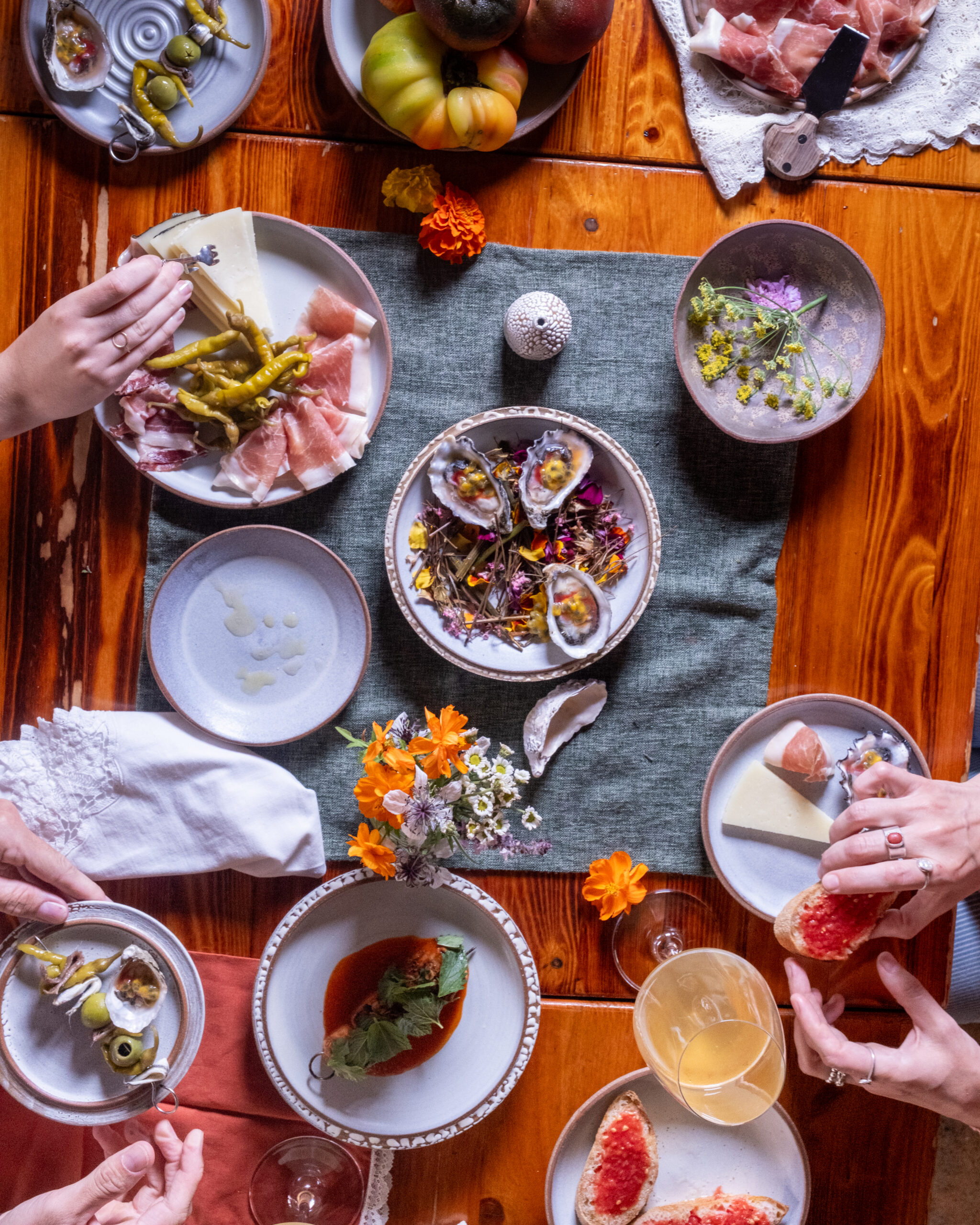
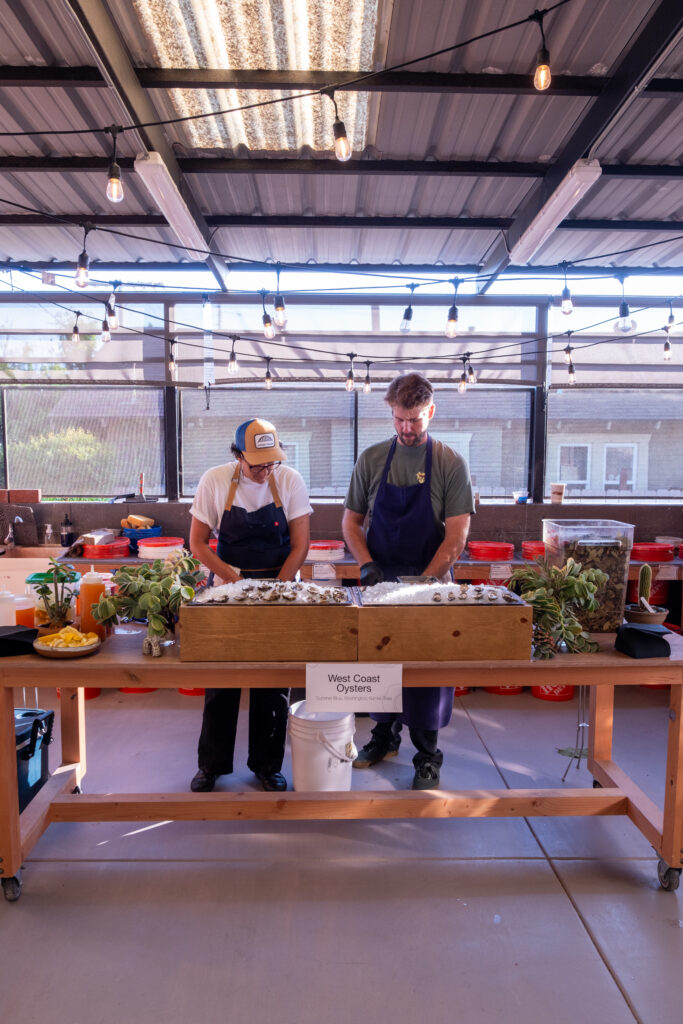
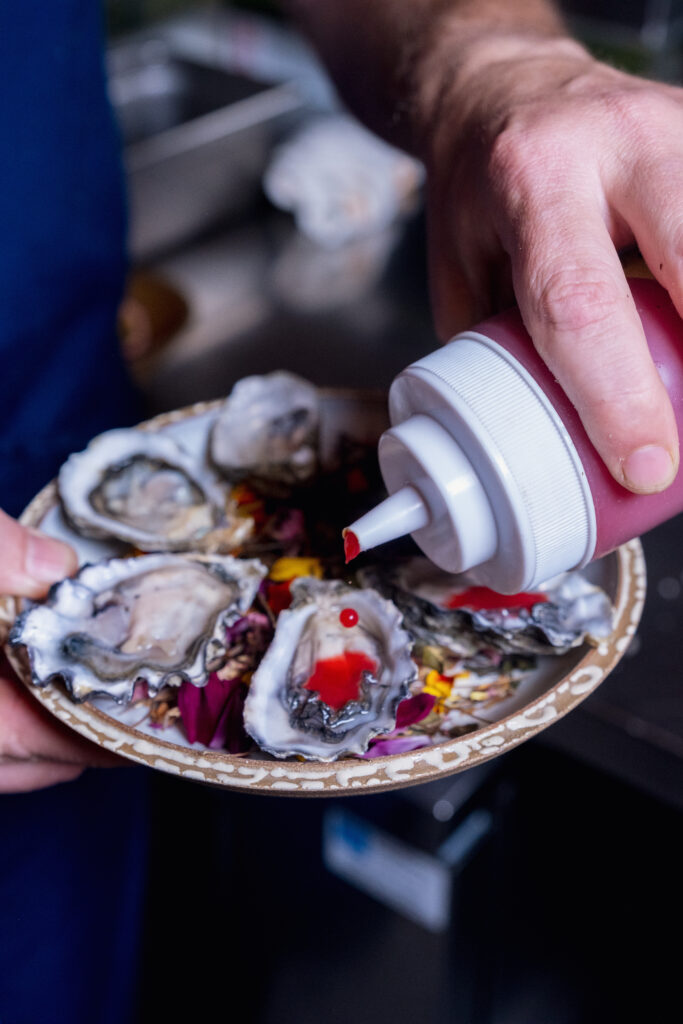
Upon entering Tao of Clay’s hearth-like warmth, each guest chose a vessel thrown by DeCapri. A punch card guided guests through stations hosted by chefs from specialty seafood restaurant Mabel’s Gone Fishing. Freshly-shucked delicacies sat atop ice-filled wooden troughs in Tao of Clay’s kiln room. The shucker filled my bowl with an array of dried herbs and adorned the bundle with shining West Coast oysters.
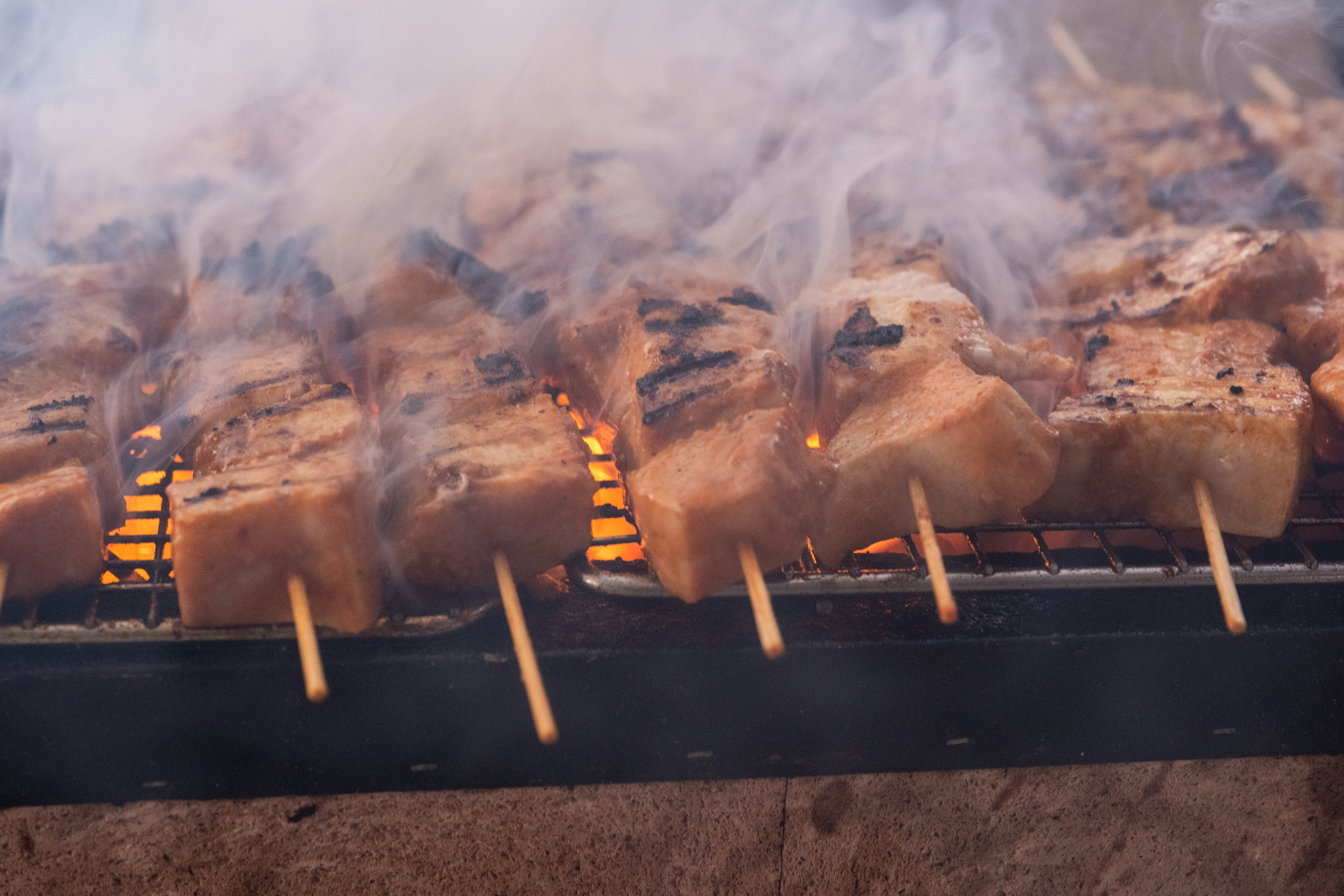
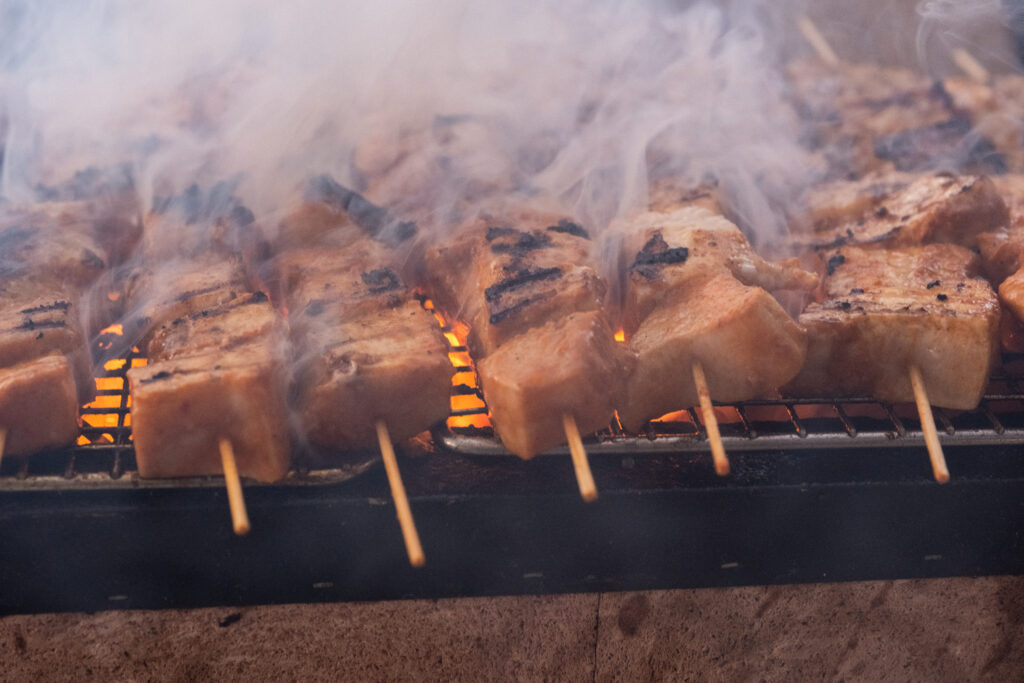
Next, a visit to the bar to grab a gin and tonic that tasted as if it had been plucked out of a citrus grove. And last, I refilled my bowl with swordfish belly skewers freshly charred over open flame by Mabel’s head chef, Tanner Stanich. I’d acquainted myself many times with pork belly, but had no idea fish could top that taste.
“A lot of people order swordfish because they want that big cut. But that big cut is attached to a huge belly loin … that a lot of people use as smoked fish or as a confit or fish salad,” Stanich said. “But it eats similar to pork belly. So marinating it helps tenderize it and breaks down the muscle tissue, especially if you add koji.”
Much to my delight, at the end of the experience, each guest takes home their DeCapri piece.
DeCapri was formerly an industrial designer in Silicon Valley who worked with engineers to design consumer products ranging from electronics to automotives.
“I like the challenge of making something well, something people are going to use every day,” DeCapri explains.
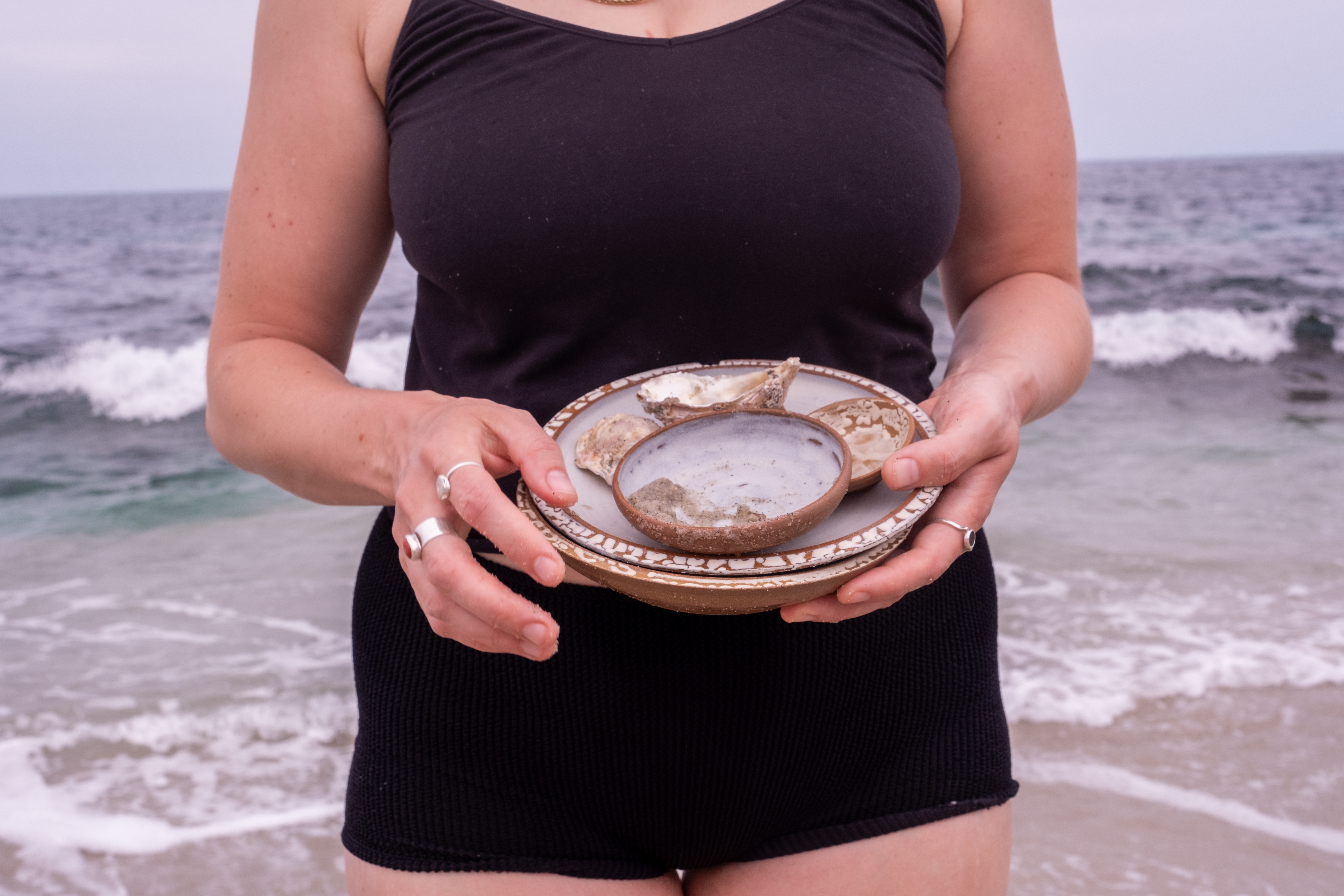
Though handmade, the keepsake Studio Table bowl is perfectly round with a gentle concave and a kind of oceanic white-blue glaze. Its rim is almost like a separate feature, swept with that same color, though here, it’s crackled over the clay.
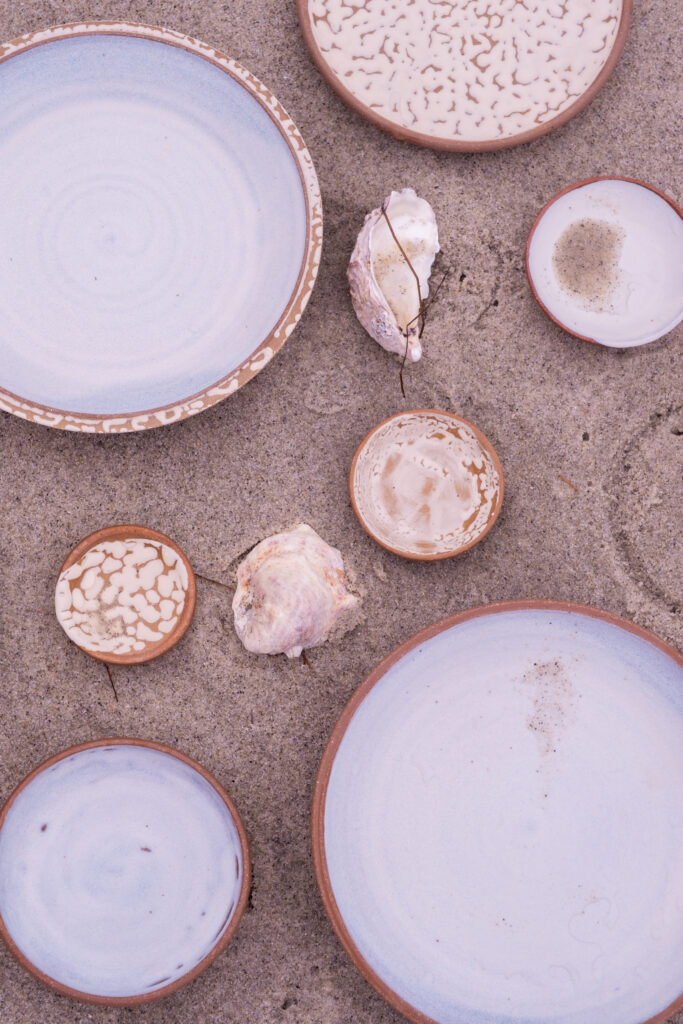
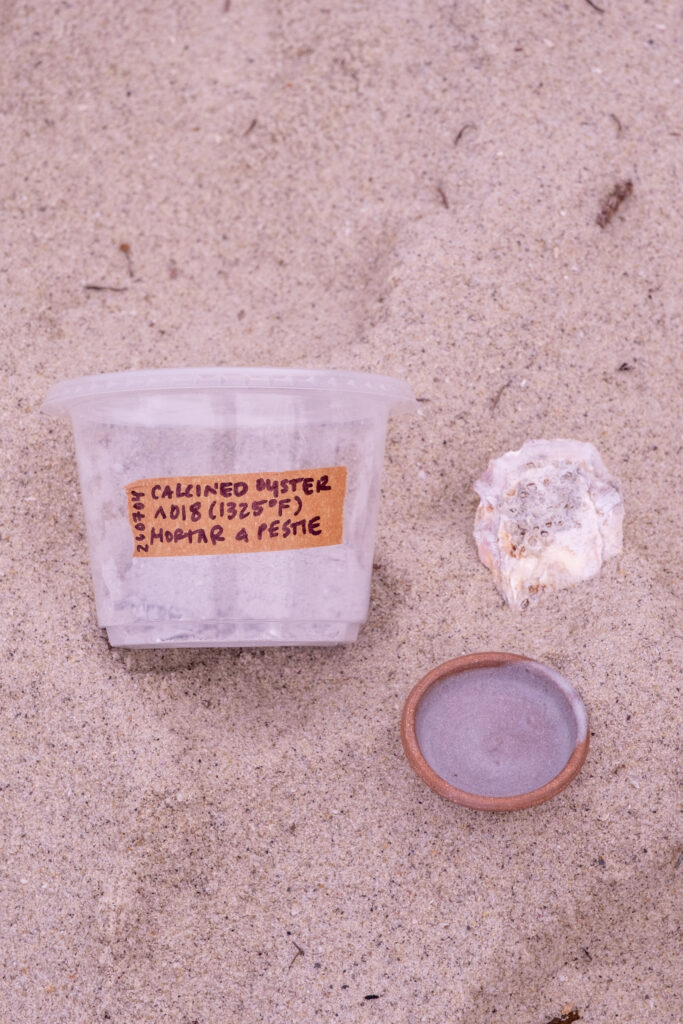
DeCapri invented the glaze by processing discarded oyster shells from Mabel’s kitchen. Through trial and error, she learned that firing the shells at 1,800° reduced them to calcified lime, producing the crackle or “crawl” effect, as she called it. And because she used oysters, which, as creatures, are unique individuals, instead of store-bought materials, each glaze is entirely unique.
“Oysters are going to have little bits of sodium or iron in it, which just adds its own flavor that’s not repeatable,” she said. “It’s some element you can’t control that adds character. It’s something I’m always chasing in my work.”
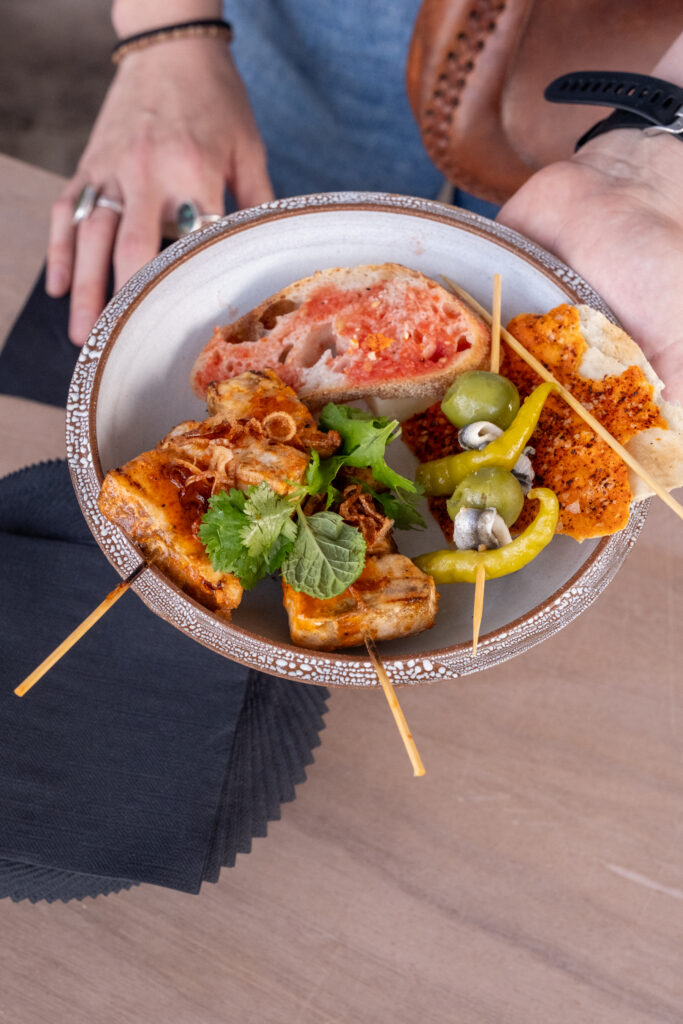
She collaborated with Mabel’s on the shape of these vessels, too. DeCapri said she brought Mabel’s some shape options for The Studio Table’s signature serving dish, which ignited debate. DeCapri wanted to create what she calls a “blate” or bowl-plate, that could hold everything from six oysters to a sandwich.
“I was really excited to do this because at home I eat off this one plate that’s a lot like this,” DeCapri said, pointing to my blate. I found it both amusing and endearing that as a potter, she herself has found a singular shape that supports all her meals.
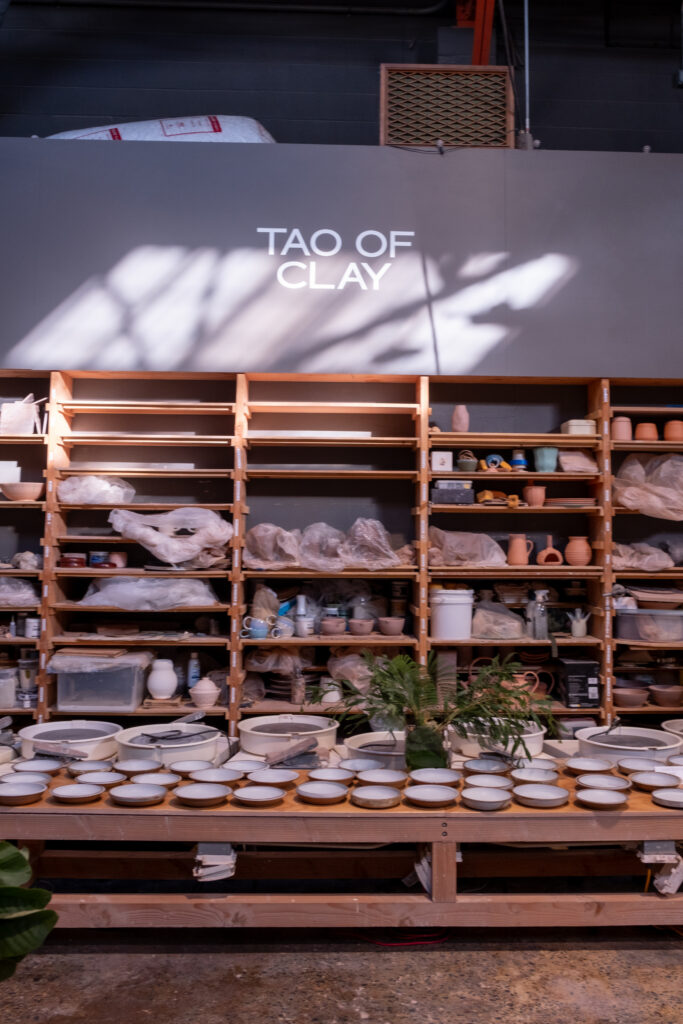
The brains behind The Studio Table event are Tao of Clay founders artist Josh Herman and his partner Rachel Herman, both New Yorkers who met in culinary school. Tao (dow) of Clay refers to a way of living according to Eastern Asian Taoist principles, following your tao, or road, if translated literally. The Hermans’ road had many twists.
Josh said he grew up a “foodie” by sifting through stacks of take-out menus on his father’s kitchen counter—cuisines from all over the world he could order nightly. He later studied ceramics under Paul Soldner, a seminal and inventive figure in that world. And, in another change of circumstance, Herman later became a Hakomi-influenced therapist, which integrates Taoist principles.
“I had become a different person and had learned about these concepts of mindfulness and self-discovery,” he said. “I saw there was real potential for the integration of ceramics and the principles of Taoism and this Hakomi therapy.”
Ceramics classes at Tao of Clay begin with breath meditation. His sculptures at the studio are something to behold. Many are towering, swirling hollowed shapes that seem to defy laws of physics—as if a collection of earthen blocks should be falling and shattering but somehow, like a photograph, they are captured in stillness.
The next Studio Table will be sometime in early 2026.
Catch up on The Good Fork
This is Just Like Your Grandmother's Guisado
Mesa Agrícola is San Diego’s version of The Bear, where a couple trained in the fine dining industry creates unforgettable Mexican comfort food
From the Inbox
This story was originally published in the Edible San Diego e-newsletter on September 24, 2026. Get exclusive early access to stories like this one and more by joining for free today.

MacKenzie Elmer
MacKenzie Elmer covers what crawls, creeps, and lurks in San Diego’s multitude of microclimates—both literal and political. She writes full-time as the environment reporter for Voice of San Diego and the biweekly Environment Report newsletter.


