



Photography by Luke Schmuecker
When people think of California wine, Napa and Sonoma often spring to mind. Our little slice of Southern California heaven is not to be overlooked, though. San Diego is making a name for itself in the world of viticulture, especially in the sustainable wine industry, and it has the history to back up today’s innovations.
With roots dating back to the 18th century, San Diego’s viticultural journey offers an unexpected blend of history and culture. From the first grapevines to today’s boutique tasting rooms, this sun-drenched region tells a story of adaptation, resilience, and rediscovery.
Early beginnings
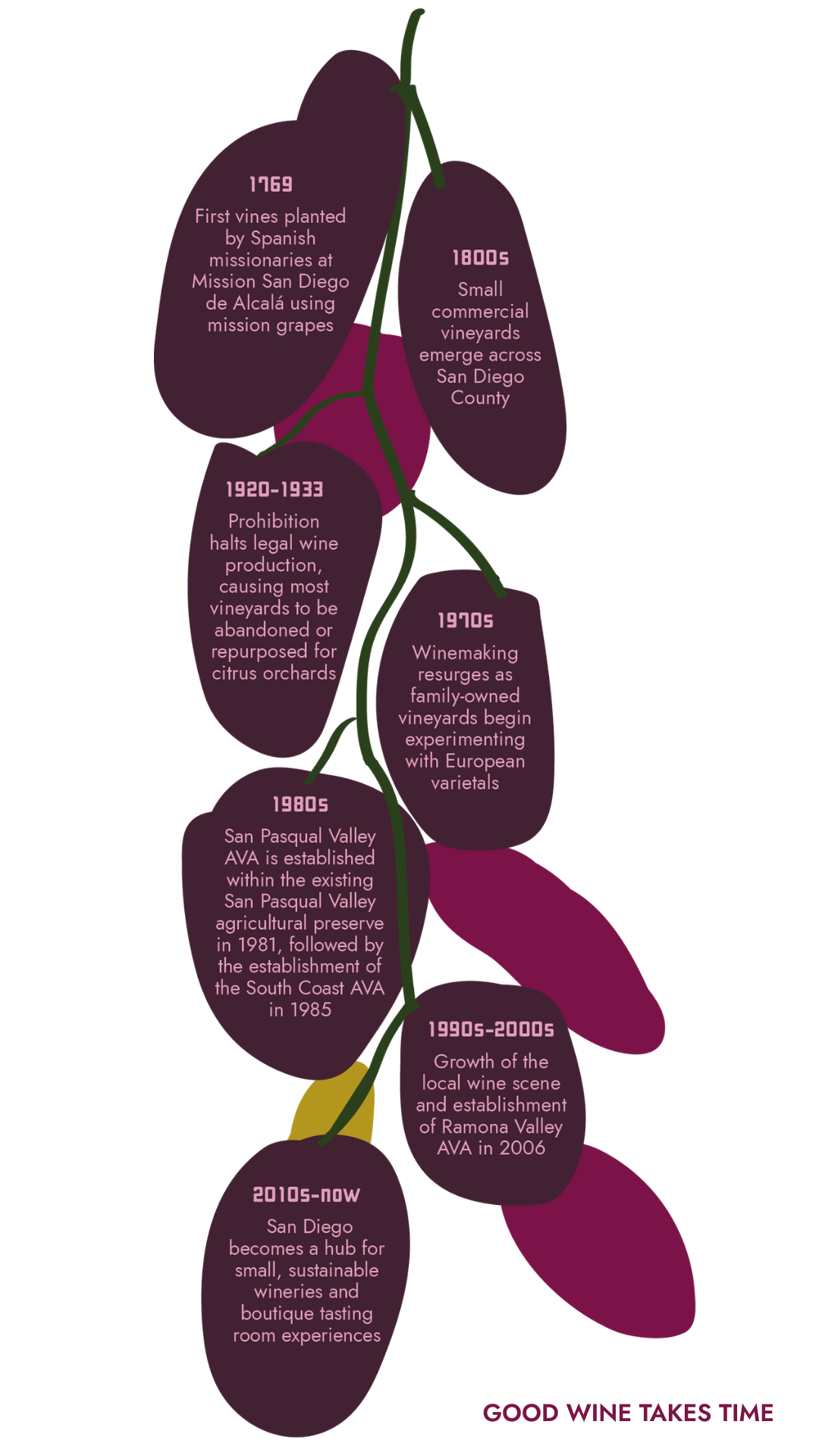
Although it’s commonly believed that grapevines were first planted at Mission San Diego de Alcalá in 1769, historian Richard Carrico believes that this isn’t quite accurate. In both his book A History of Wines and Wineries in San Diego County and his lectures, Carrico suggests that early viticulture likely took root at later mission sites, where soil quality and water access were better suited for growing grapes. Still, the mission grape, a drought-tolerant variety brought from Spain via Mexico, played a pivotal role in California’s first wines. Mission grapes thrived in San Diego’s climate and quickly evolved from solely being used in sacramental wines to becoming an integral part of early winemaking efforts. These grapes were simple, yielding rustic wine that was low in acidity. Yet they set early expectations for local wine as the simplicity created the ideal platform from which to build. Soon, settlers began planting small vineyards across the county, experimenting with mission grapes and European varietals. By the mid-1800s, these modest efforts had set the scene for San Diego’s early wine industry.
Prohibition and its aftermath
Just as quickly as San Diego’s wine industry was emerging, it came to a grinding halt in 1920. The passage of the National Prohibition Act outlawed winemaking nationwide, but its effects were felt unevenly across California. Northern California producers were able to pivot, with Napa and Sonoma supplying sacramental wine to churches and selling grapes to home winemakers. Unfortunately, San Diego lacked those lifelines, and most local vineyards were uprooted and converted to citrus orchards. Small producers who had spent years building their operations were forced to shut down. Very few survived by producing sacramental wine, but the majority of the commercial wine industry in the region vanished seemingly overnight. In 1933, Prohibition was repealed, but by then the damage was done.
The long-awaited revival
By 1970, San Diego’s viticulture legacy was little more than a memory. While San Diego’s wine industry had lain dormant for the last four decades, Napa had become a leader. The success in Northern California inspired a handful of visionary vintners to revive San Diego’s winemaking roots. These pioneers used the international winemaking styles that had put Napa on the map, introducing modern viticulture techniques and an array of grape varietals to San Diego.
Their efforts quickly sparked local interest and marked a return to winemaking in the region. The next generation of winemakers was able to rediscover the county’s nearly forgotten viticulture past. As Carrico summarized, “Wine had long been an integral, although ignored, part of San Diego’s history.” This revival spanned the next two decades, and by the 1990s, small wineries dotted the landscape once more. With an emphasis on quality over quantity and passion-driven operations, these wineries were able to find their footing and thrive.
Today’s wine scene
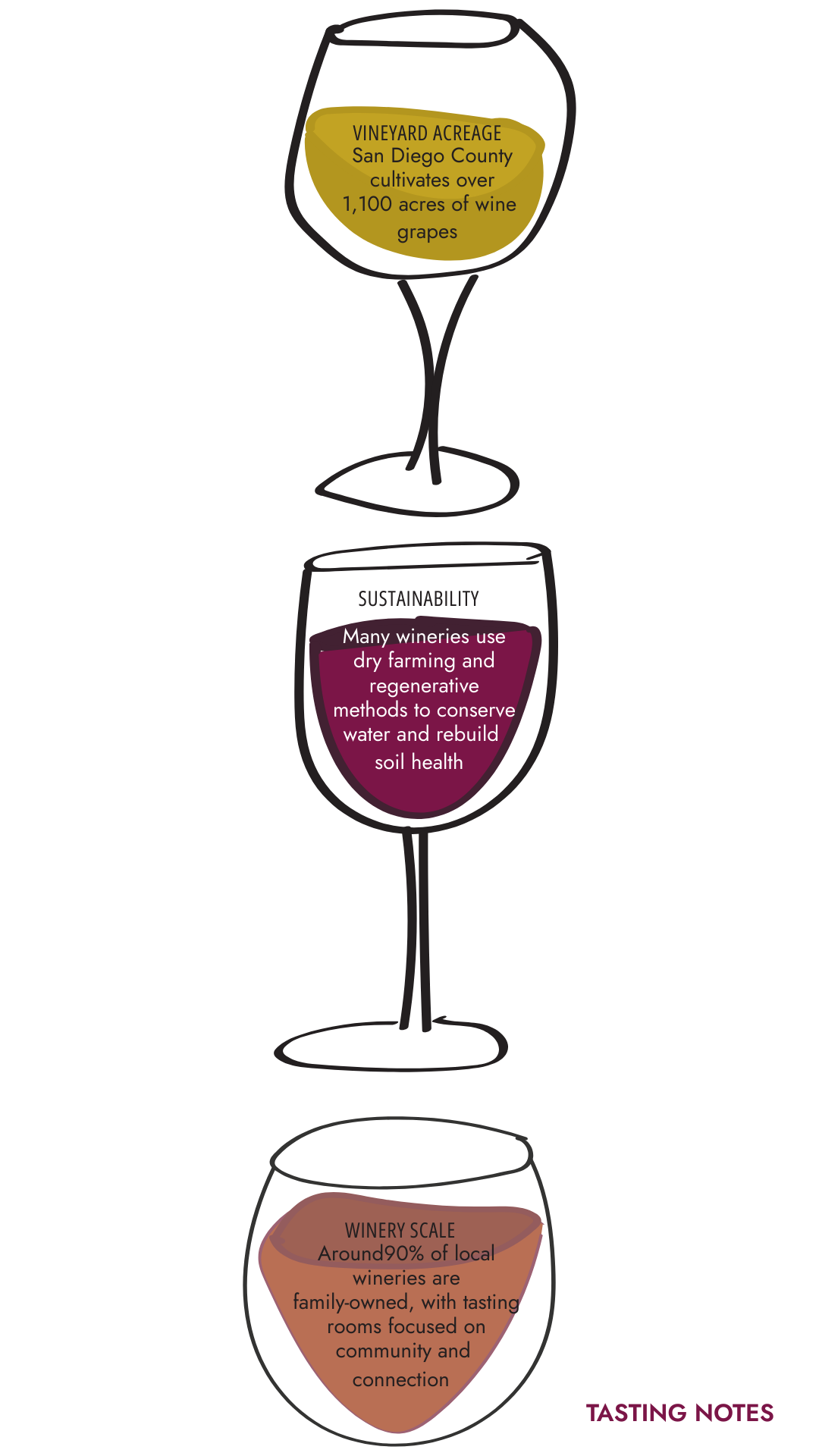
Fast forward to today, and San Diego County is now home to over 150 wineries with more than 1,100 acres dedicated to grapevines. Most of the county is part of the South Coast American Viticultural Area (AVA), which starts in Ventura and extends south across over 3.2 million acres to the US-Mexico border. Within San Diego County there are three recognized AVAs: Ramona Valley, San Pasqual Valley, and San Luis Rey, with applications and proposals pending for Highland Valley, Rancho Santa Fe, and Rancho Guejito. An AVA, or appellation, is defined by its own microclimates and varietals. While syrah, zinfandel, tempranillo, and sangiovese account for most of the grapes grown in the region, many winemakers push the boundaries of diverse grape varieties. Countless wineries are also moving towards sustainable wines by practicing dry farming, regenerative agriculture, and water conservation to adapt to Southern California’s dry conditions.
Of the county’s wineries, 90% are family-owned, offering intimate tasting experiences that showcase the region’s commitment to storytelling, connection, and history. In today’s world of changing market conditions and consumer preferences, perhaps our region’s boutique scale wineries are more resilient than larger ventures. San Diego’s community-focused mindset has attracted wine enthusiasts seeking a more authentic, down-to-earth alternative to larger commercial wine regions. From rustic countryside tasting rooms to sleek urban venues, local wine tourism has steadily flourished. According to the 2024 San Diego County Economic Impact of Wineries Report from the San Diego County Vintners Association, county wineries generated a record $54.5 million in sales in 2023, supporting more than 800 jobs, and drew about 1.3 million tasting room visitors. Furthermore, the San Diego Business Journal reports that those visitors spent nearly $2,000 per travel party, almost double what the average San Diego traveler spends, proving just how strong the region’s wine industry has become.
Native communities are also contributing to regional wine industry growth. In recent years, Pauma Tribal Farms, operated by the Pauma Band of Luiseño Indians, has been growing a variety of crops on over 300 acres, such as citrus, avocados, wine grapes, and olives, in order to improve access to healthy, seasonal, local food for tribal members as well as diversifying tribal income with sustainable agriculture and value-added products. Their efforts highlight how San Diego’s wine industry continues to evolve in ways that blend history and innovation.
Looking forward
While San Diego’s wine industry has come a long way, the region’s wine story is far from complete. Visibility remains a challenge, and without global recognition, San Diego wineries must work harder to claim space on restaurant lists, store shelves, and in consumers’ minds. As a strategy, many local wineries focus on small-lot, high-quality wines rather than mass output. This is known as boutique production and pairs naturally with wine clubs and on-site tasting tourism, an approach that allows wineries to build loyal followings, create immersive experiences, and generate direct-to-consumer revenue that sustains growth.
Like all farmers, grape growers are facing uncertainties such as rising temperatures, less predictable rainfall patterns, and more expensive irrigation water. Many are exploring waterwise techniques, emerging technology, and age-old regenerative practices. The resiliency of wine grapes goes a long way towards helping vineyards and wineries adapt to changing conditions.
For decades, San Diego was better known for its craft beer scene than its cabernet. Even today, many locals and visitors are only beginning to explore the area’s viticulture offerings. As the spotlight continues to highlight the evolving wine industry, the region is transitioning to a more balanced beverage culture. With the hope that San Diego will one day be recognized as a hub for both craft beer and wine, winemakers must navigate shifting perceptions and practical hurdles.
And yet, San Diego’s wine scene continues to defy expectations and live up to its long legacy. By focusing on small, family-owned wineries and experimental blends, the region is carving out its own identity. The goal was never to compete with better-known wine regions, but to stand out among the rest for its terroir and ingenuity. With continued investment, community support, and a growing culture of wine tourism, the next chapter of San Diego’s wine story is just beginning—and we get to enjoy it, glass by glass.
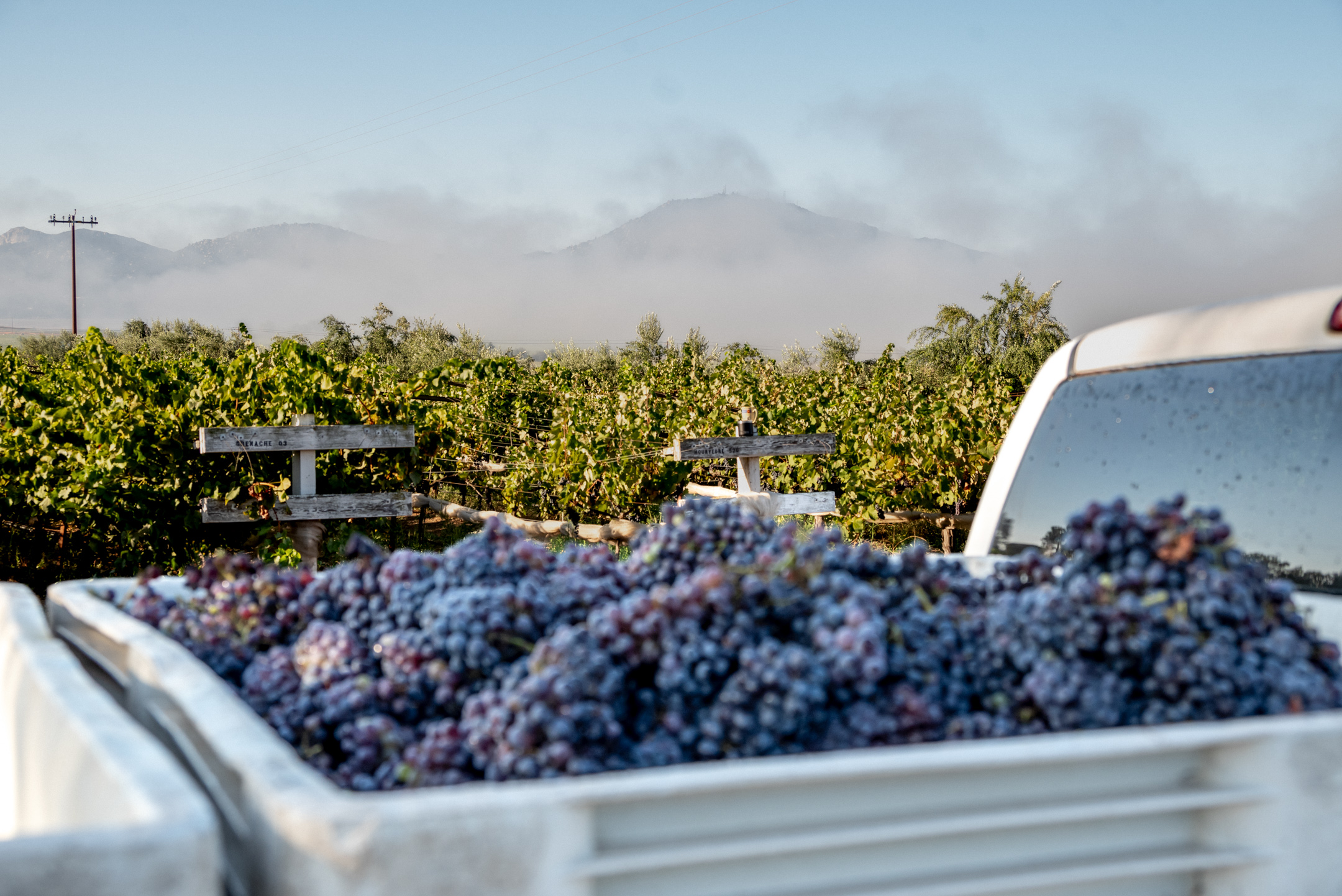
Originally published in issue 80.

More to read about San Diego wine
Success off the Vine
Meet five women who are making waves in the local wine scene, each in their own way in Success Off the Vine.
Hurry Up and Wait

Follow the winemakers of Los Pilares to Highland Hills Vineyard in Escondido for the harvest.
Campestre Mag Guest Editorial

Get a sense of the economic impact wineries offer the region.

Arianna Litrenta
Arianna Litrenta is the founder of Sunflower Creative Co., a content services agency specializing in the food & wine and travel industry. Established in 2020, Sunflower Creative Co. provides recipe development, food photography, and written content to restaurants, brands, magazines, and cookbooks.


