


Photography by Julie Pendray.
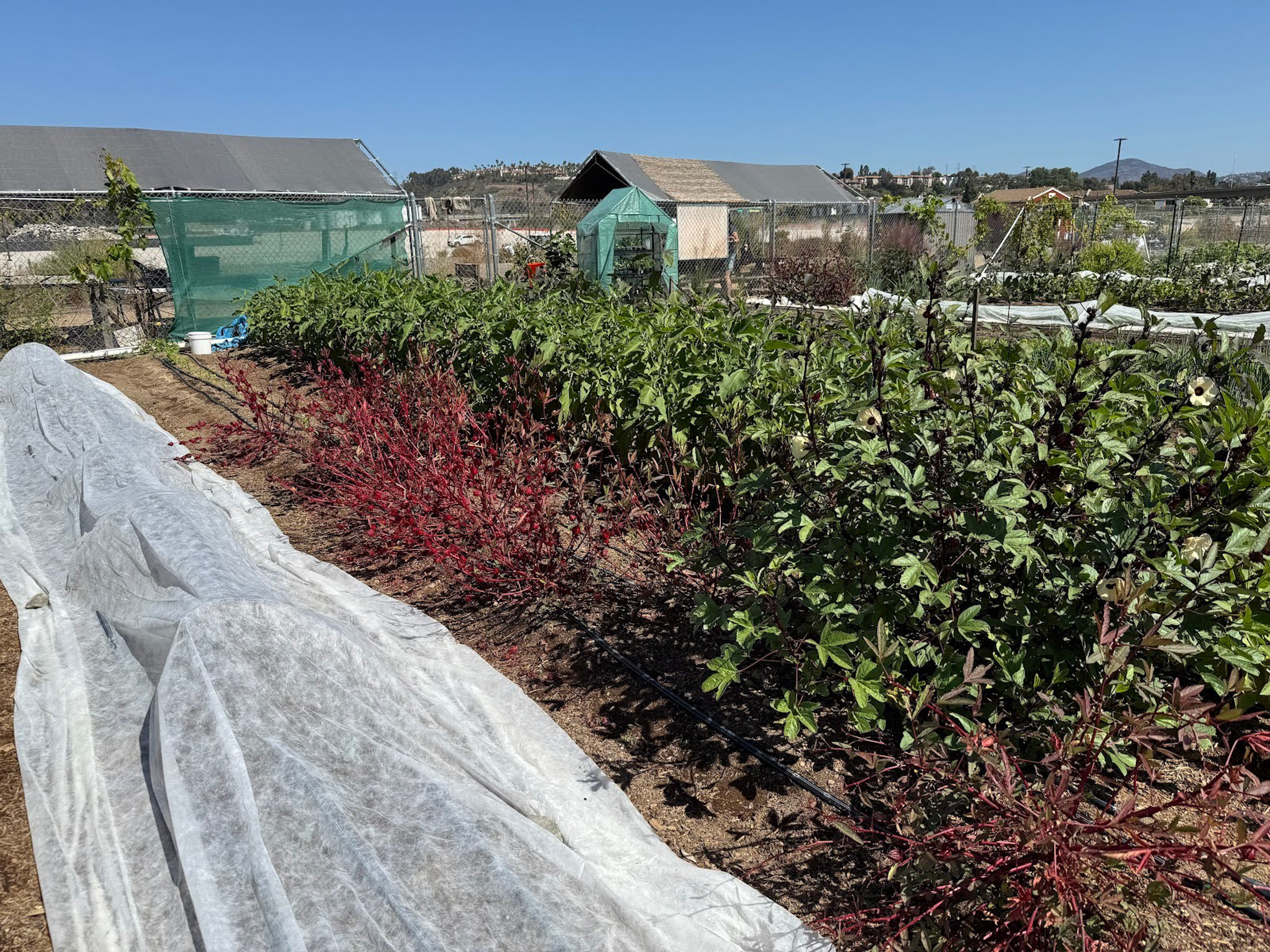
Many drivers on Interstate 8 or the 15 through Mission Valley are probably unaware of an important educational farm that’s sprouted up in Thrive Park at Snapdragon Stadium.
Here, on one acre northeast of the Trolley Stadium Station, a nonprofit called MAKE Projects is helping low-income refugees and immigrants gain agricultural and culinary skills. MAKE—an acronym for Merging Agriculture, Kitchens, and Employment—launched in 2017, after incubating through a period of early development under the International Rescue Committee. Growing crops at this sustainable farm helps people develop employment readiness.
“They don’t just learn job skills, they build confidence,” says Anchi Mei, founder and executive director. “We’ve had a very diverse group of people since we started, representing 30 countries.”
Some participants have come back to be coaches or assistants. Some entered the program with little education, while others already had advanced degrees. Since participating, 70% of program graduates have found permanent jobs. In turn, participants introduce San Diegans to recipes, flavors, spices, and produce staples from the Middle East, Africa, the Caribbean, and beyond.
Locals also benefit from the Community Supported Agriculture (CSA) program operating at the site. Subscribers receive a weekly email about the contents of the boxes, which include five seasonal items like beets, carrots, greens, cucumbers, peppers, green beans, eggplant, squash, radishes, or turnips, plus herbs, olives, grapes, apples, and flowers. Add-on pantry items, such as hummus, pickles, and jams, are also offered.
Students, CSA members, and the general public often connect with the hibiscus flowers, says Caroline Feeney, education programs manager. “They are a huge conversation starter for all visitors to the farm. Our participants from different cultures often have a connection to hibiscus tea. Our young students have been helping to save seeds from the plants for future planting. They are so colorful and vibrant that people can’t stop talking about them.”
The farm is open for CSA box pickup on Saturdays, 9am to noon, or Saturday through Wednesday at Sahara Market in Normal Heights or Parkside Market in the Altadena neighborhood.
Educational farm experiences are available for school field trips on Thursdays and Fridays, as well as for camps during school breaks. Volunteers are welcome (see website for details) and visitors can access the farm via Cottonwood Lane and Innovation Parkway.
In early 2026, MAKE Projects plans to reopen its restaurant featuring global cuisine in a new location at 4712 Felton Street, off Adams Avenue, in Normal Heights. It will include an outdoor bar, culinary garden, and a classroom.
To learn more about MAKE Projects, visit sdmake.org and find them on social media.
Originally published in issue 81.
Julie Pendray
Julie Pendray is an award-winning journalist with an environmental background. She’s also a master composter and community gardener.


