



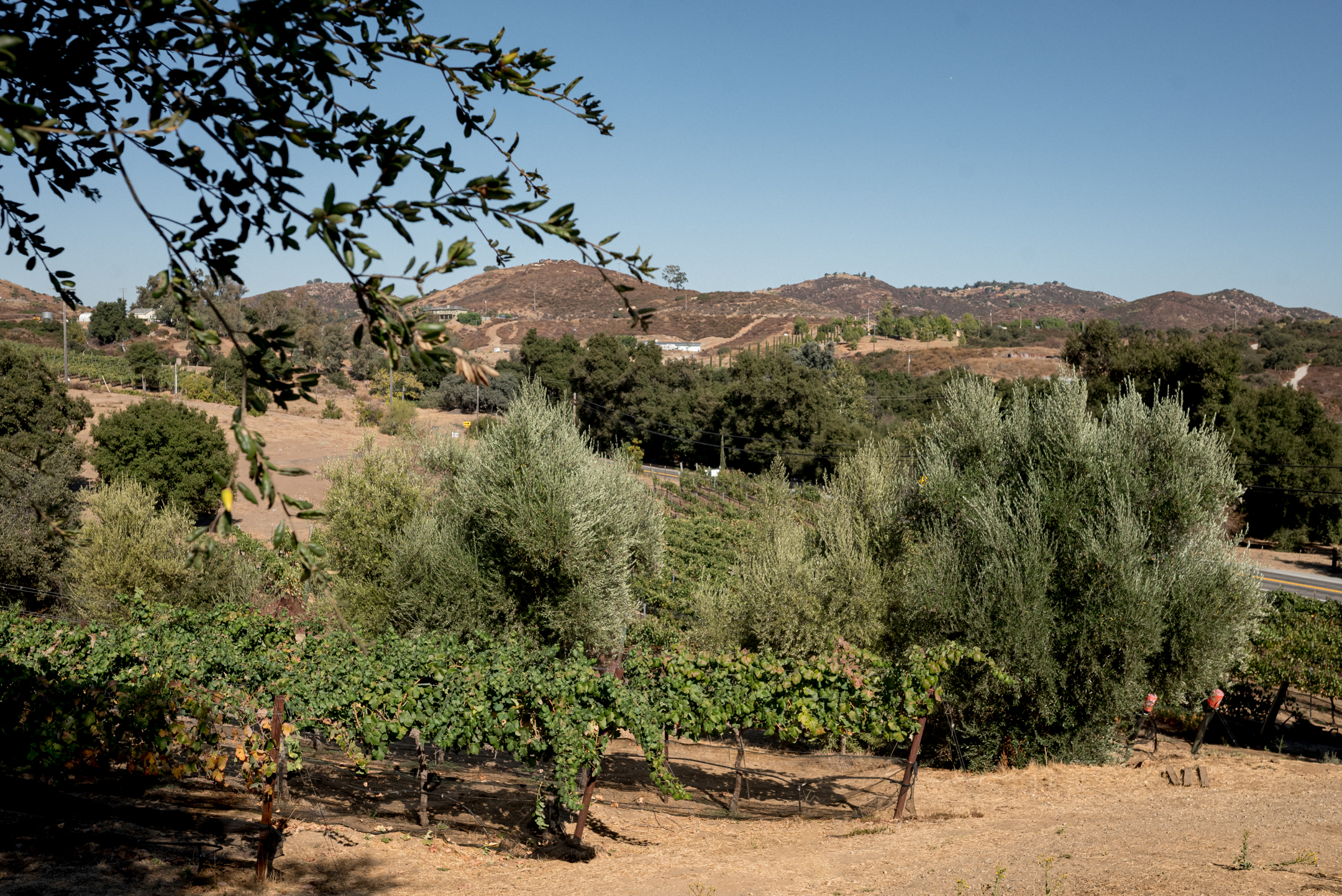
Photography by Luke Schmuecker
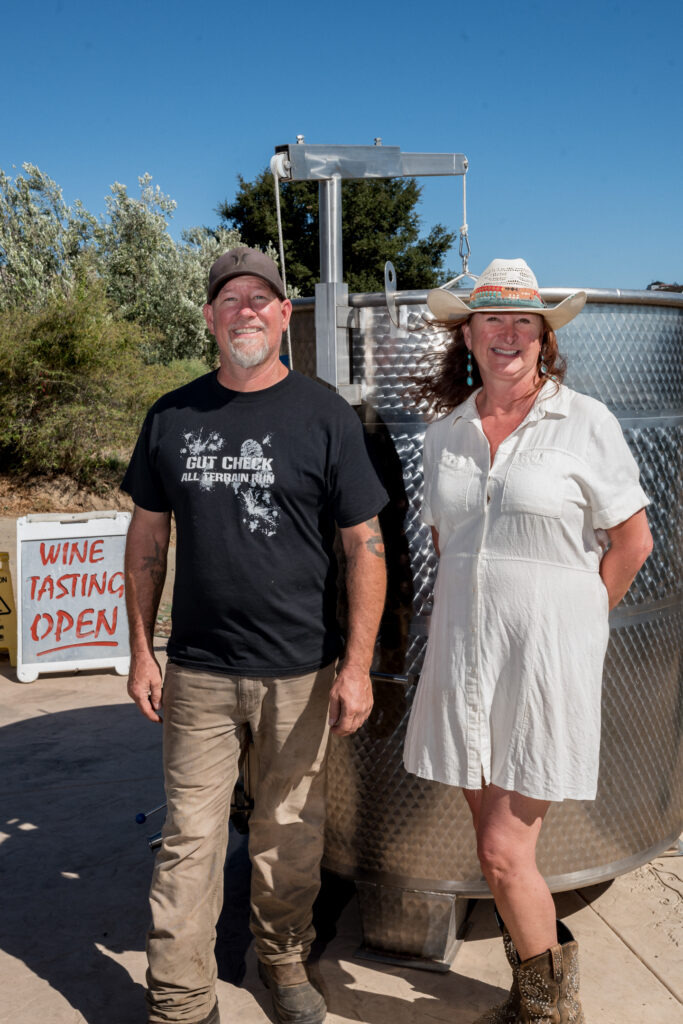
When Teri Kerns and her husband, Micole Moore, of Ramona Ranch Vineyard and Winery won a double gold and 98/100 points for their 2022 Estate Tannat in the Sunset International Wine Competition, Teri described it as “a dream come true.”
After being the first to plant the French-based tannat grapes in Southern California and also being San Diego County’s only certified sustainable vineyard and winery, both according to Kerns, the varietal has since garnered multiple awards—proving to Kerns that they are reaching the “potential of what the grape should represent.”
“Ninety-eight points is very rare. There are very few 100-point wines awarded every year. So, to get 98 points, it means we have created something exceptional,” said Kerns, president and CEO of Ramona Ranch Vineyard and Winery.
While this level of recognition is important, Kerns also believes winning wine awards, especially on a national stage, brings more awareness to the Ramona Valley wine region, which is celebrating its 20th anniversary as an American Viticultural Area (AVA) this year.
“I had people come down to the tasting room a couple of weeks ago who had seen Ramona Valley at the Orange County Fair and were curious, so they made a trip down to visit our wineries. I also had a wine professional in Arizona reach out to me and ask me to set up a tour of Ramona wineries because he heard about them at a competition,” said Kerns.
Kerns says she has been entering wine competitions since 2011, before they were commercial, submitting to many local and national competitions like the Sonoma County Harvest Fair, the San Francisco Chronicle Wine Competition (a well-regarded competition, in her opinion), and the Ramona Valley Vineyard Association Wine Competition.
Mia Marie Vineyards, located in Highland Valley, enters its wines in several local and national competitions and has also received high marks.
“In 2026, we are off to a good start. We got our first Platinum (95 points) on our 2021 Tempranillo Reserva and Best Tempranillo from the San Diego International Wine and Spirits Competition, as well as a Gold and Best Muscat on our 2024 Dry Muscat. We have also received some golds from the San Francisco Chronicle Wine Competition, Winemaker Challenge, and International Women’s Wine Competition, as well as a couple of nice ratings from Wine Enthusiast,” said Kiara Boccia-Fenlason, winemaker of Mia Marie Vineyards.
For Boccia-Fenlason, wine competitions have been a helpful marketing tool for Mia Marie Vineyards, signaling to potential guests that the winery is worth visiting.
“I think we are all guilty of leaning towards the wine with the rating when trying to choose between two bottles on the shelf. The prestige that comes from winning a competition is, of course, nice, but I am not a winemaker who does this for my ego; I am just trying to make a beautiful product because it is what I love to do,” she added.
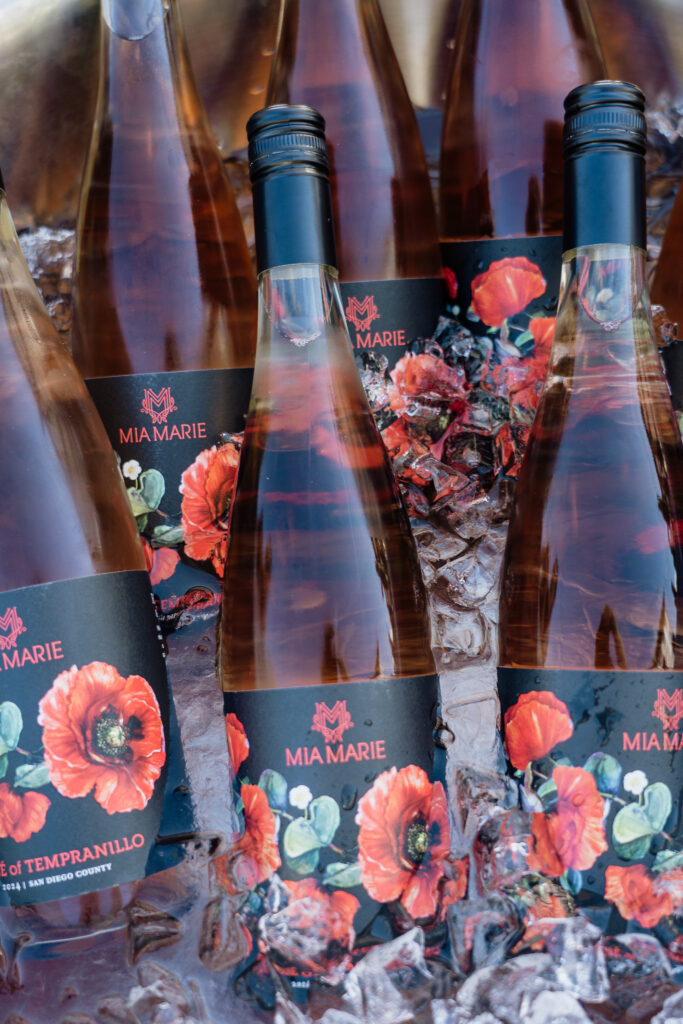
Each wine competition runs a bit differently, but overall they look at similar categories to judge a solid wine. The American Wine Society (AWS) uses a 20-point evaluation scale developed at the University of California, Davis. Each wine is judged on appearance, aroma and bouquet, taste and texture, aftertaste, and overall impression. Others like the San Diego County Fair Wine Competition, formerly Toast of the Coast, rate on a 100-point scale using the same categories as the AWS.
“The structure has to be well-balanced—acid, alcohol, tannins,” said Tami Wong, certified sommelier and owner of Stay Classy Selections, the first distributor to focus on San Diego County wines.
Wong has been judging wine competitions since 2013. As a wine buyer, she has “tasted pretty much everything” and can recognize when a wine is well-made.
“The fruit and earth should be in balance. There should be a degree of varietal correctness. Pinot noir should taste like pinot noir. They don’t all have to taste the same because Oregon is going to be different than Santa Maria, which is going to be different from Burgundy—but there needs to be a certain degree of varietal correctness. And it has to be delicious,” she said.
At the San Diego County Fair Wine Competition, judging is done blindly in a closed session with a three-person panel made up of a winemaker, a wine broker, and a professional sommelier. Wines can earn Double Gold, Gold, Silver, and Bronze awards. The San Diego International Wine & Spirits Challenge has a similar process with a panel of blind judges and categories like Silver, Gold, and Platinum, along with Best of Class and Best of Show.
Behind the scenes, Kim Whalin, the wine competition director for the San Diego County Fair Wine Competition, works magic before judges arrive to ensure the wine tasting flights she creates won’t hinder the palates of the judges. Her goal is to provide judges with the tools to score wines on clarity, balance, aroma, coloring, and finish—without distractions.
“These people have trained. They have worked very hard to be objective, but there is always a little bit of subjectivity that comes with something like this. So you work hard to give them a structure that helps to minimize that as much as possible,” said Whalin.
Katie Ostrander, event coordinator of the San Diego County Fair Wine Competition shared, “We’re really trying to help support our local wine industry by highlighting the economic value of it, and just proving that this local area has just as big of heavy hitters as Napa or other wine regions.”
After the judging is complete, winemakers at the San Diego County Fair Wine Competition are given the notes from their judges—which many winemakers say is an invaluable part of the process. Other competitions offer this service as well, but not all of them.
“Wine is very subjective, and everyone has a different palate and opinion. But we take all feedback seriously and evaluate it and decide what we want to do with it to move forward. Every data point is helpful,” said Karri Lange, winemaker for family-run Hillside Ranch Vineyard in Jamul.
Competitions have significant costs to enter and require winemakers to share several bottles of wine for judging. For example, the 2026 entry fee for the San Francisco Chronicle Wine Competition was $30 per brand entry, plus $90–$115 per wine, along with several bottles for tastings.
Donna Hendrix, president of the Jamul-Dulzura Vintners Association, which was recently created this year, says that those who have entered wine competitions have seen success—but she did share that some of the winemakers cited concerns about costs, among other reasons, for not participating in competitions.
“We hope that the regional competitions will strive to encourage local participation with a level playing field, professional judges, and useful feedback,” Hendrix added.
And while competition may be in the title, these awards aren’t a competition amongst wineries. Multiple wineries can earn gold or silver medals because each wine is typically judged individually, not against one another. Regardless, the awards prove, just like any other type of competition, how a winemaker is growing year after year.
“The quality of San Diego wine has improved every single year. Everything is getting better, [there are] far less flaws,” said Wong. “I think it’s especially important if they are winning awards every year that they are submitting because that indicates consistency. I think if someone has a bunch of medal- and award-winning wines, go there first. I do think it’s important,” she added.
And, along with improving, the more awards San Diego County wines win on the big stage will no doubt bring more visibility to the unique, high-quality wines produced in the region.
More by Elena Gomez
Campestre Mag: The Economic Impact of Drinking Local Wine
San Diego County is home to 166 active and planned wineries that contributed a whopping $54.5 million in gross sales in 2023, according to the San Diego County Vintners Association (SDCVA)’s 2024 economic impact report. In the last seven years, that figure has nearly doubled (up from $30.4 million in 2016) and 50 new wineries have since opened their doors.
» Read the full story
Coffee and Farm-to-Table Dining on its Way to Highland Valley
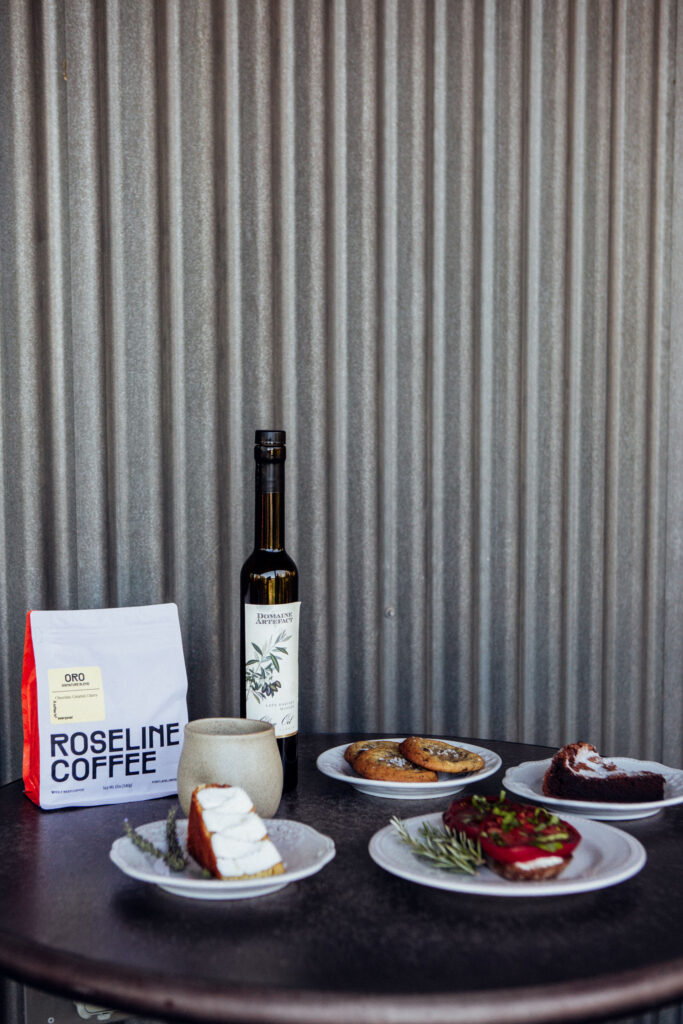
Domaine Artefact opens Café Rhône
A trip down Highland Valley Road usually means one of a few things: a visit to one of the dozen wineries in the area, a stop in Ramona, or maybe it’s the course for the latest bike excursion. Whatever the reason, if you’re looking for a snack pit stop along the way—that can be a bit tricky. Luckily, that is slowly changing.
In the area, Cordiano Winery has a menu with salads, pastas, and pizzas. And, not too far away, Orfila Winery hosts Amalfi Cucina Italiana with a full Italian menu. Now, Domaine Artefact Vineyard and Winery is looking to bring coffee to the region, along with a farm-to-table-inspired menu.
In a reimagined space next to their tasting room, Café Rhône will open on April 23rd with what Kristin Puccini, manager and niece to the owner, describes as a “sun-drenched, coastal French vibe.”
» Read the full story

Elena Gomez
Elena Gomez is an Emmy-nominated reporter who has spent the majority of her journalism career working in broadcast news in San Diego and Los Angeles, covering everything from wildfires to the Oscars. Gomez’s recent lifestyle pieces have earned her awards with the San Diego Press Club and the Society of Professional Journalists in San Diego. Gomez is the founder of HomeTold with Elena, an award-winning blog focused on hyperlocal stories about North County San Diego.


